

Tripura is planning to introduce a reform for flat mutation, addressing a long-standing gap in the state’s land laws.
Agartala: As the Government of Tripura is eyeing digital land governance, anticipated individual Flat Mutation Reform and land mapping drive garner public attention.
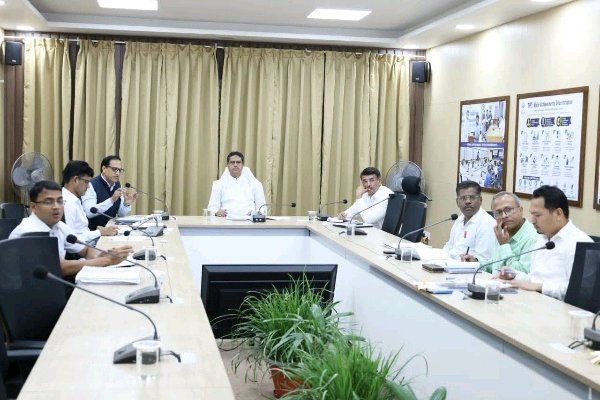
Chief Minister Prof. (Dr) Manik Saha on Tuesday directed officials to fast-track amendments to land laws while completing digital demarcation of over 6.3 lakh land parcels under two major projects, signalling a stronger push towards transparent and technology-driven land governance.
Flat Mutation Reform Emerges as Major Policy Priority
One of the most important decisions taken during the high-level revenue review meeting was the proposal to introduce a legal provision for the mutation of flats and apartments.
Officials informed the Chief Minister that the Tripura Land Revenue and Land Reforms Act, 1960 does not currently provide for individual mutation of flats. This has created legal and administrative hurdles for apartment owners in urban areas.
Taking note of the issue, Dr Saha directed the Revenue Department to prepare a Cabinet proposal for suitable amendments to the Act.
Once approved, the reform is expected to provide legal recognition to apartment ownership through individual mutation records. It could also simplify property transactions, improve access to financial services and reduce disputes relating to urban housing.
The Enewstime Desk opines, with apartment construction increasing in Agartala and other towns, the amendment will modernise the state’s land administration framework to match changing urban development patterns.
Government Sets Deadline for Large-Scale Digital Land Mapping
Alongside the legal reforms, the state government has intensified efforts to complete digital mapping of pending land records.
The Chief Minister instructed officials to complete the digital demarcation of nearly five lakh pending land plots under the Bhunaksha Project using modern survey equipment.
The Bhunaksha initiative aims to integrate cadastral maps with digital land records. This will improve the accuracy of land ownership details and reduce inconsistencies in official records.
Prof. Dr Saha also directed the department to begin demarcating around 1.31 lakh forest patta plots within a fixed timeline.
Officials said modern survey technology will help prepare accurate digital maps and strengthen land record management across the state.
The combined exercise covers more than 6.3 lakh land parcels. It represents one of the largest digital land mapping programmes undertaken in Tripura.
Technology Takes Centre Stage in Revenue Administration
The review meeting focused on multiple technology-driven initiatives designed to modernise land governance.
The Chief Minister stressed that digital systems should improve transparency, reduce delays and make government services more citizen-friendly.
He said efficient land administration plays a vital role in economic growth, investment promotion and better public service delivery.
Officials reviewed progress on several ongoing initiatives, including Automatic Mutation, Circle Rate rationalisation, the NAKSHA Project, Tea Garden Administration reforms and Agri-Stack implementation.
Among these, the proposed Automatic Mutation system received significant attention.
Under the proposal, land records will update automatically after property registration. Citizens will no longer need to submit separate applications for mutation after completing registration.
The system is expected to reduce paperwork, minimise delays and improve the accuracy of land records.
The Chief Minister directed officials to study successful automatic mutation models implemented in other states before introducing the system in Tripura.
Digital Survey to Strengthen Urban Land Management
The meeting also reviewed the progress of the National Geospatial Knowledge-based Land Survey of Urban Habitation (NAKSHA) Project.
The initiative uses high-resolution geospatial technology to prepare accurate digital land records in urban areas.
Officials informed the meeting that ground-testing under the project will begin shortly within the Agartala Municipal Corporation area.
The survey will support better urban planning, improve property management and strengthen municipal governance.
Accurate digital records are also expected to reduce future ownership disputes and improve public access to land information.
Agri-Stack to Build Verified Farmer Database
The government also assessed the implementation of Agri-Stack, a Digital Public Infrastructure programme jointly executed by the Revenue and Agriculture departments.
The initiative seeks to create a verified Farmer Registry, geo-referenced farm maps and crop-sown registers.
Officials believe these digital databases will help deliver government benefits more efficiently while improving agricultural planning and transparency.
The programme will also support better targeting of welfare schemes and improve policy decisions in the agriculture sector.
Tea Sector Reforms Also Under Review
Apart from digital governance, the meeting examined proposals aimed at strengthening Tripura’s tea industry.
Officials discussed plans to promote tea tourism, encourage productive use of vacant tea estate land and attract greater private investment.
The proposals also seek to reduce avoidable legal disputes while protecting the interests of tea workers and other stakeholders.
The government expects these measures to generate employment and contribute to the state’s economic growth.
Government Calls for Faster Implementation
Concluding the meeting, Chief Minister Prof. Saha instructed all departments to implement the proposed reforms within fixed timelines.
He emphasised stronger coordination among departments, wider adoption of digital technologies and regular monitoring of progress.
The Chief Minister said the reforms would create a modern revenue administration capable of delivering faster services, supporting investment, strengthening agricultural governance and improving public confidence in land management.
The review meeting took place at the Conference Hall of the Tripura Institute for Transformation (TIFT).
It was attended by Secretary to the Chief Minister Kiran Gitte, Revenue Secretary Milind Ramteke and Additional Secretary of the Revenue Department Subhash Chandra Saha. District Magistrates and Collectors from all eight districts participated through video conferencing.
With legal reforms, digital surveys and technology-driven land management moving simultaneously, the Tripura government is positioning land governance as a key pillar of its broader administrative modernisation agenda.
