

Across Tripura, workers, artisans, technicians, vehicle owners, businesses, and institutions observed Vishwakarma Puja with traditional rituals, cleaning and worshiping tools, machines, and vehicles, highlighting the festival’s enduring connection to craftsmanship, livelihood, technical knowledge, skill, and gratitude for human creativity.
Key Takeaways:
- Vishwakarma Puja celebrates creativity, technical skill, and the knowledge behind skilled work.
- Worshipping tools, machines, and vehicles expresses gratitude for the equipment that supports livelihoods.
- Bamboo and cane craftsmanship of the State reflects the intriguing human creativity and inherited skill, and Vishwakarma Puja is a way to recognise and pay respect to their knowledge.
From bamboo and cane crafts shaped by skilled hands to machines operating in modern workshops, Vishwakarma Puja in Tripura celebrates the many ways people create, build, repair and work.
The festival carries a meaning that goes beyond the worship of equipment. It reflects respect for the tools that support livelihoods and gratitude for the human knowledge that gives those tools purpose.
| Looking Back: Artificial elephant adds new flavour at Vishwakarma Puja in Bishramganj ITI in Tripura |
Across the state, organisations, institutions, businesses, workshops and workplaces observed Vishwakarma Puja with traditional rituals and religious customs. Workers cleaned and decorated their equipment. Vehicle owners prepared their two-wheelers and four-wheelers for worship. Technicians, mechanics, craftsmen, and other working communities joined the celebrations.
At the centre of the festival is a simple idea. Every creation begins with human potential.
From Imagination to Creation
Lord Vishwakarma is traditionally revered as the divine architect and craftsman. Hindu tradition associates him with construction, design, craftsmanship, and technical skill.
His symbolism remains closely connected with everyday work.
A bamboo basket starts with an idea. A piece of furniture requires design and measurement. A building needs planning and technical knowledge. A machine begins with a concept before engineering turns it into a working object.
The journey from an idea to a finished product requires more than raw materials. It demands knowledge, patience, precision and practice.
Vishwakarma Puja celebrates this journey. It recognises the creative mind behind an idea and the skill that turns that idea into reality.
Tools Matter in the Puja
Vishwakarma Puja places tools and equipment at the centre of its rituals for a reason.
For working people, tools are closely connected with livelihood.
A mechanic depends on instruments to repair vehicles. A carpenter relies on equipment to shape wood. An electrician needs specialised tools. A technician works with machines and technical equipment. An artisan uses simple implements to transform raw materials into useful products.
These objects therefore carry significance beyond their material value.
Cleaning, arranging and worshipping tools during Vishwakarma Puja expresses gratitude for the role they play in everyday work. It also reflects an understanding that equipment deserves care.
A well-maintained tool can support better work. A properly handled machine can serve for longer. Responsible use can also improve safety.
The ritual thus connects spiritual gratitude with a practical attitude towards equipment.
The Skill Behind Every Tool
A tool cannot replace knowledge.
A hammer requires someone who knows how to use it. A welding machine needs technical understanding. A vehicle depends on the skill of its driver and the expertise of those who maintain it. Traditional craft tools become effective only in the hands of someone who understands their purpose.
This makes craftsmanship a form of knowledge.
Experienced workers understand materials, measurements, balance, structure and technique. They often develop these abilities through years of practice.
Formal education may provide technical foundations. Apprenticeship and hands-on experience add another layer of understanding.
Vishwakarma Puja brings attention to both.
The festival recognises that skilled work requires the cooperation of the mind and the hands. Tools provide assistance, but human judgment gives direction.
Honouring the Dignity of Work
Modern life often focuses on finished products. It can overlook the people and processes behind them.
A completed building represents the work of engineers, masons, carpenters, electricians and other skilled workers. A repaired vehicle reflects the expertise of mechanics and technicians. A handmade bamboo product carries the experience of the artisan who created it.
Vishwakarma Puja offers a moment to recognise this work.
Workers, artisans, mechanics, technicians, drivers, engineers and business owners participate in the celebrations. Their professions differ, but they share a common dependence on knowledge, tools and practical skill.
The festival therefore gives visibility to the dignity of skilled work.
It reminds people that creating, repairing and maintaining useful things requires expertise. That expertise contributes directly to families, businesses and communities.
Tradition Meets Modern Technology
The nature of work continues to change. Traditional artisans still work with bamboo, cane, wood and metal. Modern workplaces increasingly depend on computers, electrical equipment, vehicles, industrial machinery and other technologies.
Vishwakarma Puja accommodates both worlds.
The tools may change, but the human role remains central.
Someone must imagine a product before designing it. Someone must understand a machine before operating it. Someone must maintain equipment to keep it functional. Someone must identify a problem before developing a solution.
Technology can expand human capability. It does not remove the need for creativity, knowledge and skill.
This is why the festival continues to find meaning in changing workplaces.
Vishwakarma Puja Across Tripura
The festival created a festive atmosphere in different parts of the state.
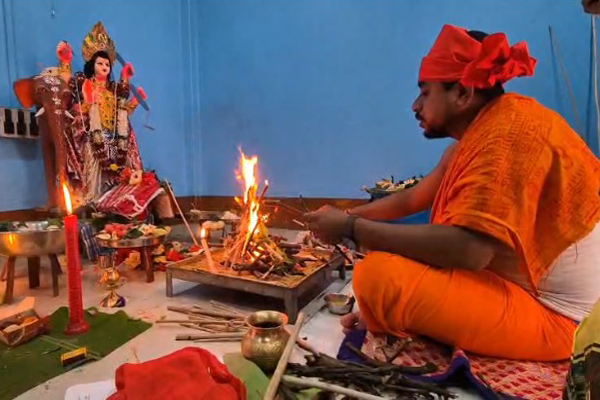
From the morning, devotees gathered at puja venues and workplaces. Priests conducted rituals with traditional chants and religious ceremonies.
Many workplaces underwent cleaning and decoration before the puja. Machines, tools and vehicles became part of the rituals.
Workers prayed for progress, success and safety in their professions. They also sought blessings for the proper use and functioning of equipment.
Several locations organised small cultural programmes and distributed prasad.
These celebrations brought religious observance into everyday workplaces. They also created an occasion for workers and business communities to come together.
Gratitude for Human Potential
At its deepest level, Vishwakarma Puja is a celebration of what people can create.
Human beings turn ideas into objects. Individuals transform raw materials into useful products. They repair what is damaged. Human touch improves existing designs. They develop new techniques and pass knowledge to future generations.
Tripura’s bamboo and cane craftsmanship reflects this potential in a particularly tangible form. So do the work of mechanics, technicians, engineers, drivers, builders and other skilled professionals across the state.
The festival brings these different forms of human ability together.
It expresses respect for the tools that support work and gratitude for the people who know how to use them.
More importantly, it celebrates the knowledge and creativity behind every act of making.
Vishwakarma Puja is therefore more than a ritual centred on machines and equipment. It is a reminder that every carefully crafted object begins with an idea, develops through knowledge and takes shape through human skill.
In that sense, the festival offers a lasting message for a changing world: respect the tools, value the craft and remain grateful for the human capacity to create.
