

The World Bank is reviewing the implementation of the Tripura Rural Economic Growth and Service Delivery Project (TRESP) across state-level institutions and field locations from September 28, with a focus on livelihoods, village planning, institutional capacity and tribal development.
Key Takeaways
- The World Bank has recognised TRESP as one of the best-performing World Bank-funded projects in Northeast India.
- The review focused on Producer Groups, VGF, CLFs, CMTCs and stronger livelihood outcomes.
- The three-day review will include field visits, stakeholder meetings and direct assessment of project implementation.
The World Bank has described the Tripura Rural Economic Growth and Service Delivery Project (TRESP) as one of the best-performing World Bank-funded projects in Northeast India during a three-day review that began in Agartala on September 28.
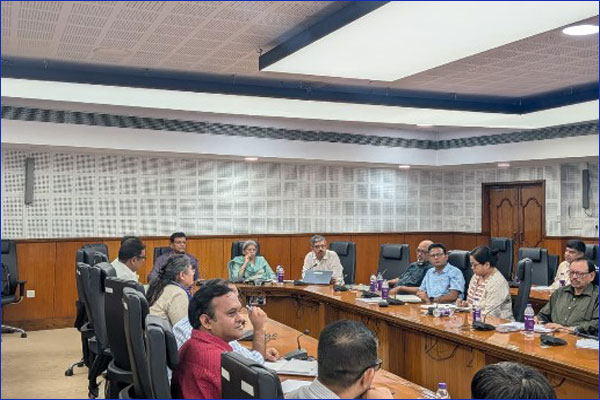
The review opened with a high-level meeting on project performance, livelihood interventions, institutional strengthening and preparations for the next phase of implementation.
World Bank Reviews TRESP Progress
TRESP Project Director Subhashis Das chaired the meeting. World Bank Task Team Leader Preeti Kumar attended the review along with Amit Arora, Souvik Mitra, Nilanjana Gupta, Kamlesh and other members of the World Bank team.
Kumar praised the progress achieved under TRESP. She also asked the project team and stakeholder departments to maintain the current momentum across sectors.
She stressed the need for effective implementation and stronger delivery of project outcomes at the field level. The review therefore focused not only on progress but also on how TRESP interventions can generate sustainable results for rural communities.
Focus on Producer Groups and Rural Enterprises
The review gave particular attention to Producer Groups (PGs), Viability Gap Funding (VGF), Cluster Level Federations (CLFs) and Community Managed Training Centres (CMTCs).
The discussions stressed the need to move PGs beyond their formation stage. The groups need to develop sustainable business activities and stronger market connections.
The review also examined ways to improve access to working capital and ensure effective utilisation of VGF support. These areas form an important part of efforts to strengthen rural livelihoods under the project.
Officials also assessed the progress of CLFs and CMTCs. The review covered financial management, record keeping, regular monitoring and capacity-building activities.
Participants discussed the potential of CMTCs to function as local knowledge and training centres. Such facilities can support women farmers and rural entrepreneurs through localised training and knowledge-sharing.
Three Strategic Areas Identified
Project Director Subhashis Das highlighted three key areas for further action. These include capacity building through SIPARD, participatory Village Development Plans (VDPs) and research-oriented activities on tribal development.
Das stressed the importance of strengthening training programmes for government officials through SIPARD. The objective is to improve implementation and service-delivery capacity in tribal areas.
He also underlined the need to prepare VDPs across all 23 TRESP operational blocks. The project will also develop and implement 23 Model VDPs.
The participatory VDP approach seeks to bring community priorities and local development needs into an integrated village-level planning process. It is intended to give local requirements a stronger role in development planning.
Research to Support Tribal Development
Das also highlighted the importance of research-based activities on tribal development.
The proposed research areas include education, health and wellbeing, public infrastructure, livelihoods, primary-sector growth and access to public services.
Such research can generate evidence for future planning and development interventions. It can also provide inputs for shaping programmes around the needs of tribal communities.
World Bank Team to Visit Field Projects
The review will now move from the state-level assessment to direct field evaluation. From September 29, the World Bank team will visit project sites across different RD Blocks.
The team will assess TRESP activities directly at the field level. It will also interact with beneficiaries, Producer Groups, community institutions, field officials and other stakeholders.
These interactions will help the team understand implementation progress and gather feedback on field-level experiences.
The World Bank team will also hold detailed review meetings with stakeholder departments during the visit. The discussions will examine sector-wise progress, implementation challenges and emerging outcomes.
The meetings will also identify measures needed to sustain and accelerate TRESP’s performance.
Review Links Policy Assessment with Field Reality
The three-day exercise combines strategic assessment at the state level with direct field verification. It also brings together project stakeholders and beneficiaries to examine implementation on the ground.
The approach provides an opportunity to identify areas that require further strengthening across different sectors.
With the World Bank recognising TRESP among the better-performing World Bank-supported projects in Northeast India, the ongoing review will focus on sustaining that momentum. The exercise will also examine ways to strengthen rural livelihoods, participatory village development, institutional capacity and sustainable tribal development in Tripura.
