

Tripura has sharply improved student retention across its school system, with primary-level dropouts reaching zero in 2025-26. The state now plans to tackle low enrolment in remote areas through residential schools while expanding early childhood education, open schooling and foundational learning initiatives.
Key Takeaways:
- Tripura reported a zero dropout rate for primary students in 2025-26.
- Secondary school dropout fell from 25.51% in 2013-14 to 10.40%.
- The state plans residential schools and Balvatika programmes to improve access and foundational learning.
Tripura has recorded a major improvement in school retention, with the primary-level dropout rate reaching zero in the 2025-26 academic year, Chief Minister Prof. Dr. Manik Saha said on Tuesday.
The state now plans to build on this progress by addressing low enrolment in remote and rural areas. The government is also preparing measures to strengthen foundational learning and improve the transition of students between different stages of education.
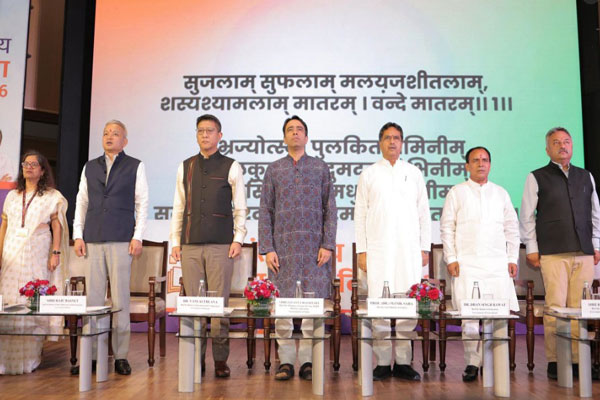
Saha made the announcement while addressing the International Literacy Day and ULLAS Mela 2026 in New Delhi.
Secondary dropout also declines sharply
The latest figures indicate significant progress beyond the primary level.
According to UDISE+ data, Tripura’s primary dropout rate stood at 2.21% in 2013-14. The government has since brought the rate down to zero in 2025-26.
The state has also reduced dropout among students in Classes IX and X. The secondary-level rate stood at 25.51% in 2013-14. It declined to 10.40% in 2025-26.
Saha said the government wants to reduce the secondary dropout rate further within the next three to four years. He also stressed the need to improve the transition rate across the state’s education system.
| Education level | 2013-14 | 2025-26 |
|---|---|---|
| Primary, Grades I-V | 2.21% | 0% |
| Secondary, Classes IX-X | 25.51% | 10.40% |
The figures reflect the government’s wider focus on keeping children within the formal education system and improving learning outcomes.
Residential schools planned in low-enrolment areas
While retention has improved, the government faces another challenge in remote parts of Tripura: low enrolment in some government schools.
Saha said the state is considering the establishment of modern residential schools in areas where individual schools have very few students.
Under the proposed approach, schools with extremely low enrolment could be merged or clubbed. The government would then develop state-of-the-art residential institutions on the model of Eklavya Model Schools.
The plan seeks to provide children in remote communities with access to better educational infrastructure and facilities.
It also represents a shift from focusing only on dropout figures to addressing the wider problem of access, enrolment and educational quality.
Balvatika to cover 2,048 primary schools
The government is also preparing to strengthen education before children formally enter Class 1.
Saha said Tripura will introduce Balvatika, a one-year pre-school programme for children aged five to six years, in all 2,048 primary schools within the next two years.
The programme aims to help children develop basic learning competencies before entering formal primary education.
The government wants students to begin Class 1 with stronger foundational skills. This approach aligns with the emphasis placed by the National Education Policy 2020 on early childhood care, foundational literacy and numeracy.
ULLAS brings practical learning to adults
Tripura has also expanded its literacy efforts through the ULLAS — Understanding Lifelong Learning for All in Society programme.
The state has implemented the initiative under the Nav Bharat Saaksharta Karyakram since May 2022.
Saha highlighted several new practices introduced under ULLAS during 2026.
Financial literacy forms one part of the programme. Neo-learners receive practical exposure to banking activities, including cheque books, deposit forms and banking services.
The state has also introduced experiential market-based learning. Participants use common activities such as buying goods, selling products and comparing prices to develop literacy and numeracy skills.
Health and hygiene awareness has emerged as another focus area. Demonstrations on handwashing, sanitation and personal cleanliness help learners connect literacy with everyday life.
Tripura expands alternative education options
Saha said the state has recently approved the establishment of the Board of Open Schooling and Examination in Tripura.
The decision follows the framework of the National Education Policy (NEP) 2020. The open-schooling system is expected to provide an alternative route for learners who cannot follow the conventional schooling system.
The government is also assigning district magistrates and collectors a greater role in improving education standards in their respective districts, particularly in rural and remote locations.
Focus shifts to quality and learning outcomes
The Chief Minister said the government’s education agenda extends beyond reducing dropout rates.
Tripura is simultaneously working on school infrastructure, digital education, skill development and girls’ education. The state is also focusing on inclusive education and improving overall teaching and learning standards.
The emphasis on foundational learning remains central to the strategy. The government wants children to develop core competencies at an early stage so that they can progress more effectively through the school system.
Saha also linked literacy with broader social development. He said literacy can strengthen confidence, dignity and empowerment while creating greater opportunities for individuals and communities.
Education linked to Viksit Bharat goal
Saha said Prime Minister Narendra Modi views education and literacy as key foundations for building a developed India.
He said the broader objective is to equip children with knowledge, skills, values and opportunities that can contribute to the vision of Viksit Bharat by 2047.
For Tripura, the immediate challenge is to convert improved retention into stronger learning outcomes. The government’s next phase will therefore focus on remote-area access, early childhood education, foundational competencies and continued reduction in secondary-level dropouts.
Union Education Minister Pralhad Joshi, Minister of State for Education and Skill Development Jayant Chaudhary, Uttarakhand Education Minister Dr. Dhan Singh Rawat, Mizoram Education Minister Dr. Vanlalthana, Himachal Pradesh Education Minister Rohit Thakur and Sikkim Minister Raju Basnet attended the event.
Senior officials from the Union Education Ministry, including School Education and Literacy Secretary T. K. Anilkumar and Additional Secretary Archana Avasti, were also present. Officials and representatives from several states and Union Territories attended the programme.
