

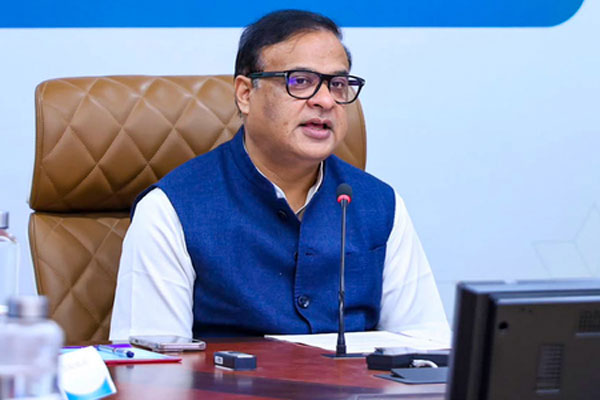
Assam Chief Minister Himanta Biswa Sarma urged collective action against child labour on World Day Against Child Labour, calling for children to carry books instead of burdens. However, poverty, unemployment and financial struggles continue to push vulnerable families toward child labour, creating a major social challenge across Assam.
Quick Glance
- Assam CM Himanta Biswa Sarma called for joint efforts to eliminate child labour and protect children’s rights.
- Child rights groups highlighted poverty and economic insecurity as major reasons behind child labour.
- Activists stressed that education support and stronger social security measures are essential.
- World Day Against Child Labour events were organised across Assam to promote child welfare.
Agartala/Guwahati: Assam Chief Minister Himanta Biswa Sarma has renewed the call to end child labour and ensure that every child gets access to education, safety and opportunities. His message on World Day Against Child Labour carried a simple vision — children should hold books instead of burdens.
However, behind this vision lies a complex reality. Many poor families across Assam continue to face economic challenges that force children to enter the workforce instead of classrooms.
The issue is not only about awareness. It is also linked to poverty, unstable income and limited financial support for struggling households.
CM Sarma Highlights Education as the Key to a Better Future
In a message shared on social media platform X, CM Sarma emphasised that protecting children’s rights is important for building a stronger society.
He said children represent the future and must receive opportunities to learn and grow.
“Let us work together to ensure that those hands hold books, not burdens, and that every child gets the opportunity to learn and thrive,” the Chief Minister said.
His message focused on education as the foundation for development. It also encouraged society, government institutions and individuals to work together to remove barriers preventing children from attending schools.
Poverty Remains a Major Barrier Against Ending Child Labour
Child rights activists and social organisations say many children enter labour because their families struggle to survive.
For several households, the income earned by children becomes a part of the family’s daily survival strategy. When adults face unemployment or low wages, children often become additional earners.
Experts believe that simply asking families to send children to school is not enough. Many parents understand the importance of education but face financial pressure.
The challenge becomes bigger in rural and economically weaker areas where families have fewer resources.
Child Rights Groups Demand Stronger Support Systems
Child welfare organisations have repeatedly stated that awareness campaigns alone cannot solve the child labour problem.
They argue that stronger social protection measures, better financial assistance and strict enforcement of labour laws are needed.
According to activists, child labour often develops because of multiple factors:
| Major Reasons Behind Child Labour | Impact on Families |
|---|---|
| Poverty | Families depend on children’s earnings |
| Unemployment | Parents struggle to provide basic needs |
| Limited educational access | Children leave schools early |
| Financial insecurity | Survival becomes the priority |
Activists believe that preventing child labour requires addressing the economic conditions that push families toward difficult decisions.
Education Alone Cannot Work Without Economic Security
Education remains one of the strongest tools to break the cycle of poverty. However, experts say children need continuous support to stay in schools.
Many children who leave school due to financial pressure face the risk of returning to labour.
Government programmes have focused on increasing school enrolment, reducing dropout rates and improving child welfare services. However, child rights groups say stronger implementation at the ground level remains necessary.
They believe families need financial stability so that education becomes a realistic option instead of a distant dream.
Assam’s Efforts to Improve Child Welfare
The Assam government has introduced several initiatives to improve education access and support vulnerable children.
These efforts focus on:
- Increasing school participation.
- Supporting children from economically weaker backgrounds.
- Reducing school dropout rates.
- Strengthening child protection measures.
Government departments, schools and civil society organisations have continued awareness programmes to highlight children’s rights.
During World Day Against Child Labour observances across Assam, various organisations promoted the importance of creating a safe environment for children.
Human Stories Behind the Child Labour Challenge
The fight against child labour is closely connected with the everyday struggles of poor families.

For many households, the choice between education and income is difficult. Parents may want their children to study, but financial hardship can force them to make painful decisions.
Child rights advocates say long-term solutions must focus on improving family income, expanding social security and ensuring that government support reaches the most vulnerable communities.
They believe that the dream of children carrying books instead of burdens can become reality only when families no longer have to choose between survival and education.
Why Government Appeals Need Stronger Ground Action
The Chief Minister’s message has renewed attention on child labour in Assam. However, activists say the next step must involve practical action.
They argue that awareness programmes should work alongside stronger economic support systems.
A child-free labour environment requires cooperation among government agencies, communities, schools and families.
The goal is clear — every child should have the freedom to learn, grow and build a better future.
