

The Spear Corps of the Indian Army has launched a 14-day specialised training programme for CISF personnel deployed at Maharaja Bir Bikram (MBB) Airport in Agartala. The programme aims to strengthen aviation security, improve emergency response and enhance counter-drone capabilities through joint operational training.
Key Focus Areas
- Indian Army launches 14-day training for CISF at MBB Airport, Agartala.
- Programme runs under the Military-Civil Fusion framework.
- Training covers counter-drone operations and aviation security.
- CISF personnel undergo Quick Reaction Team (QRT) drills.
- Focus on critical infrastructure and vital area protection.
- Initiative strengthens security at the State’s only international airport.
- Army and CISF enhance interoperability against emerging threats.
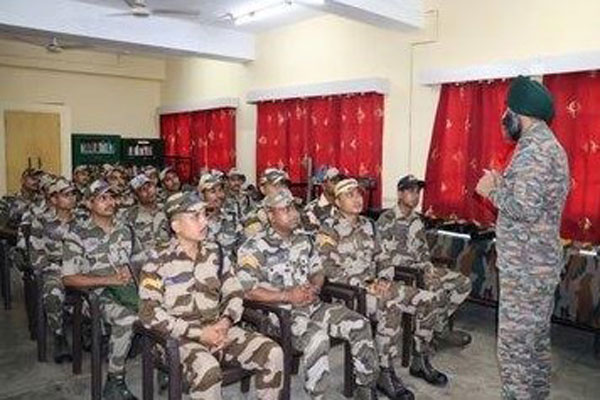
Agartala: Conducted under the Military-Civil Fusion framework, the exercise focuses on strengthening operational synergy between the Indian Army and the CISF. Army instructors will train airport security personnel in advanced tactical procedures to improve preparedness and enhance the protection of critical aviation infrastructure at Maharaja Bir Bikram (MBB) Airport in Agartala.
Training Targets Modern Aviation Threats
The 14-day programme focuses on modern security challenges. Army instructors are training CISF personnel in advanced operational techniques to protect critical airport infrastructure.
The course includes counter-drone operations. Personnel are learning how to detect, assess and respond to threats from unauthorised or hostile drones operating near airport airspace.
The Army is also conducting Quick Reaction Team (QRT) drills. These exercises improve response time during emergencies, security breaches and high-risk incidents. The drills also strengthen coordination during real-time operations.
Focus on Critical Infrastructure Protection
The training places strong emphasis on industrial and critical infrastructure security. CISF personnel are learning advanced methods to protect key aviation facilities against sabotage and other threats.
Another important module covers the security of Vital Areas and Vital Points (VA/VP). The sessions focus on runway zones, access gates, terminal facilities and other sensitive installations within the airport complex. The objective is to improve surveillance, access control and incident response.
Strategic Importance of MBB Airport
Maharaja Bir Bikram Airport serves as Tripura’s primary civil aviation hub. It also acts as a major gateway to Northeast India.
Its location near the international border makes airport security a strategic priority. Security agencies now face both conventional threats and emerging risks such as low-flying drones. The joint training aims to prepare personnel for this changing security environment.
Army and CISF Combine Their Expertise
The Indian Army brings expertise in combat operations, anti-sabotage measures and counter-drone warfare. The CISF manages day-to-day aviation security across airports.
The joint programme combines these strengths. It improves operational coordination while allowing each force to continue performing its designated role. The collaboration is expected to create a stronger and more integrated security framework at MBB Airport.
An official associated with the programme said modern security threats demand seamless coordination among security agencies. The official said the Army’s tactical expertise, combined with the CISF’s specialised aviation security role, would significantly strengthen the airport’s overall defence preparedness.
Capacity Building for Future Challenges
The programme also reflects the Indian Army’s continued focus on capacity building and closer cooperation with the Central Armed Police Forces (CAPFs).
After completing the training, CISF personnel will return to duty with enhanced tactical skills, improved situational awareness and better threat-mitigation capabilities. The initiative is expected to further strengthen the security of Agartala airport and improve preparedness against evolving security challenges.
