

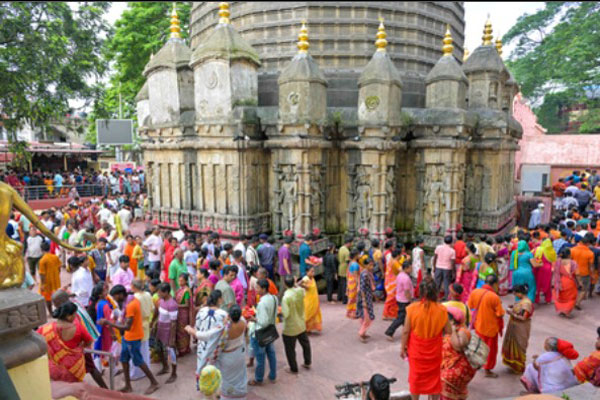
The annual Ambubachi Mela 2026 began at Assam’s Kamakhya Temple on June 22, attracting an expected eight lakh devotees and visitors. The four-day festival is creating major economic activity in Guwahati through religious tourism, hospitality, transport and local business participation.
Quick Glance: Key Entity & Data Highlights
- Event: Ambubachi Mela 2026
- Venue: Kamakhya Temple, Nilachal Hills, Guwahati
- Expected Visitors: Over eight lakh devotees, pilgrims and tourists
- Economic Focus: Religious tourism, hospitality, transport and local commerce growth
Agartala/Guwahati: The four-day Ambubachi Mela has once again positioned Guwahati as a major religious tourism destination in Northeast India. Thousands of pilgrims, spiritual seekers and tourists have started arriving at the historic Kamakhya Temple.
According to our on-the-ground report in Guwahati, the festival is generating increased movement across hotels, transport services, food businesses and local markets. The large-scale gathering is expected to provide economic momentum to several sections connected with the tourism ecosystem.
Furthermore, the festival’s significance extends beyond religious traditions. It has become an important annual economic event for Assam’s service sector.
The Ambubachi Mela marks the sacred period associated with Goddess Kamakhya. Devotees consider the festival one of the most important celebrations of Shakti worship in India.
Religious Tourism Emerges as a Growth Engine for Guwahati
The growing popularity of Ambubachi Mela reflects the expanding role of religious tourism in Assam’s economy. The arrival of lakhs of visitors creates demand for multiple services.
| Sector | Expected Impact During Mela |
|---|---|
| Hospitality | Increased demand for hotels, lodges and temporary accommodation |
| Transport | Higher passenger movement through local and regional services |
| Food & Retail | Growth in sales for restaurants, vendors and markets |
| Tourism Services | Increased activity for guides, travel operators and local businesses |
According to temple authorities, the festival attracts devotees from different states and countries. Consequently, Guwahati experiences a temporary rise in economic activity during the event period.
Speaking exclusively to Enewstime Desk, officials confirmed that arrangements have focused on managing visitor movement while supporting a smooth pilgrimage experience.
The festival also strengthens Assam’s identity as a spiritual tourism hub. It connects cultural heritage with local economic participation.
Local Businesses Benefit From Large-Scale Pilgrim Movement
The arrival of thousands of visitors creates opportunities for small traders and service providers. Vendors near pilgrimage routes often experience increased demand during the festival period.
Furthermore, transport operators, accommodation providers and food suppliers become important parts of the temporary festival economy.
The economic impact is not limited to the temple area. Visitors travelling to Guwahati often explore nearby attractions, purchase local products and use city-based services.
An internal document reviewed by Enewstime highlights the importance of coordinated planning for managing large visitor gatherings and maintaining public services.
However, the seasonal nature of the festival also requires long-term strategies. Authorities and stakeholders need to ensure that tourism growth creates sustainable benefits for local communities.
Assam Strengthens Religious Tourism Infrastructure Through Ambubachi Mela
The Assam government and Kamakhya Temple management have prepared extensive arrangements for the festival. Security, healthcare, sanitation and accommodation facilities have been prioritised.
These preparations support both visitor safety and tourism management. Additionally, better infrastructure during major events can improve the overall visitor experience.
The festival’s scale demonstrates the economic potential of faith-based tourism. Furthermore, successful management of such events can encourage more visitors to explore Assam’s cultural and spiritual destinations.
The reopening of the temple on June 26 after the ‘Nivritti’ ritual is expected to bring another major wave of devotees seeking blessings and sacred offerings.
Kamakhya Temple Festival Expands Assam’s Tourism Footprint
Located on Nilachal Hills, Kamakhya Temple remains one of the most respected pilgrimage centres among followers of Shakti traditions.
The Ambubachi Mela gives Assam a unique position in India’s religious tourism map. The festival combines spirituality, culture and economic activity.
Moreover, the event highlights how traditional celebrations can support modern economic sectors. Tourism-linked businesses gain visibility, while Guwahati receives national and international attention.
The festival continues to demonstrate the connection between cultural heritage and regional economic development.
News Analysis: Veteran Journalist Perspective
How Ambubachi Mela Reflects Assam’s Changing Tourism Landscape
From an Assam-based veteran journalist’s viewpoint, Ambubachi Mela represents more than a religious gathering. It reflects Assam’s evolving approach towards using cultural assets for economic growth.
Historically, Kamakhya Temple has remained a powerful spiritual centre in eastern India. However, the increasing scale of Ambubachi Mela shows how pilgrimage events now influence governance, tourism planning and local commerce.
The key question is: Can Assam convert annual religious gatherings into long-term tourism growth?
The answer depends on sustainable planning, infrastructure development and effective coordination between government agencies and local stakeholders.
The festival also highlights the changing relationship between tradition and economy. Religious events that once focused mainly on rituals now influence transport networks, hospitality markets and employment opportunities.
A journalist observing the ground situation would note that Ambubachi Mela has become a symbol of Assam’s ability to combine cultural heritage with economic ambition.
