

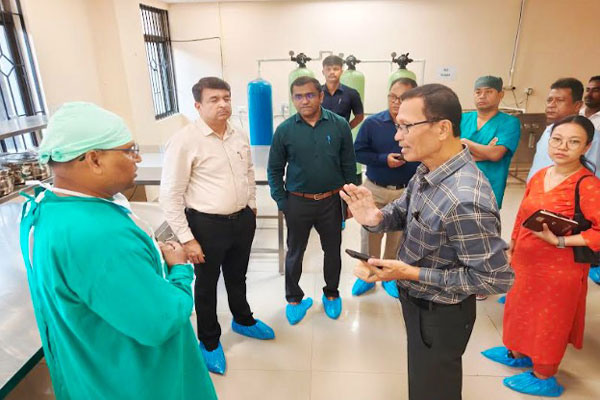
Tripura Health Secretary Kiran Gitte on June 23, 2026 reviewed cancer healthcare facilities at the Atal Bihari Vajpayee Regional Cancer Centre in Agartala and announced steps to strengthen district-level cancer services through regular oncologist visits and medical support.
Quick Glance
- Oncologists will visit three district day-care centres in Dhalai, Gomati and North Tripura.
- Local doctors will receive training and support for cancer-related services.
- Bone marrow transplantation preparations have started at the Agartala Cancer Centre.
- The initiative aims to reduce patient travel pressure on the state’s only regional cancer facility.
Agartala : Tripura has moved towards a decentralised cancer treatment model with a plan to strengthen district-level healthcare support. During an inspection of the Atal Bihari Vajpayee Regional Cancer Centre, Health Secretary Kiran Gitte directed officials to expand specialist support beyond Agartala.
According to our reporter, the focus of the review was not only infrastructure development but also ensuring that cancer patients across Tripura receive essential services closer to their homes.
The Health Secretary reviewed patient services, medical equipment, laboratories and treatment facilities. Furthermore, he instructed authorities to ensure that available resources remain fully operational.
The state currently has three cancer day-care centres in Dhalai, Gomati and North Tripura districts. These centres are expected to play a bigger role in reducing the need for frequent travel to the capital city.
Oncologists to Support District Centres Every Month
The new approach aims to connect district healthcare facilities with specialist oncology services. Under the plan, oncologists from the regional cancer centre will visit district day-care centres every month.
During these visits, specialists will train local doctors and provide professional guidance. Consequently, patients will be able to access services such as oral chemotherapy support and palliative care closer to their districts.
Speaking to the media, including Enewstime Desk reporter, officials confirmed that the objective is to reduce unnecessary travel for patients and families.
Many cancer patients from remote areas currently depend on Agartala for follow-up care and supportive treatment. However, the district-centred approach is expected to improve accessibility and reduce the burden on both patients and the main cancer hospital.
Bone Marrow Transplant Facility and Equipment Strengthening
The inspection also highlighted preparations for introducing bone marrow transplantation services at the Atal Bihari Vajpayee Regional Cancer Centre.
Health Secretary Kiran Gitte directed officials to begin necessary steps for starting the service at the earliest. He also reviewed the status of advanced facilities available at the centre.
These include:
| Facility | Development Focus |
|---|---|
| Bone Marrow Ward | Early operationalisation |
| CT Scan | Maintain regular patient services |
| MRI | Ensure uninterrupted operation |
| PET Scan | Manage increasing workload |
| LINAC Machine | Strengthen cancer treatment capacity |
Furthermore, Gitte instructed officials to ensure that no treatment-related machine remains inactive for a long period.
He directed Medical Superintendent Dr. Shiromoni Debbarma to take immediate steps whenever equipment problems occur. According to the Health Secretary, manufacturers should be contacted directly if existing service providers fail to respond.
An internal document reviewed by Enewstime highlights that equipment availability and specialist manpower were among the major priorities discussed during the inspection.
Reducing Pressure on Agartala Through Better Planning
The government’s district healthcare strategy is aimed at balancing specialist treatment and local service delivery.
The Health Secretary also advised officials to properly utilise Patient Welfare Committee funds. He emphasised strengthening existing facilities rather than allowing available resources to remain unused.
In addition, the government plans to improve medicine accessibility through Amrit Pharmacy services. Officials stated that unavailable medicines should be arranged quickly and shortages should be addressed immediately.
The initiative reflects a wider effort to improve cancer treatment accessibility within Tripura. Patients may gradually receive more supportive services without travelling long distances.
Patient Families to Receive Shelter Support Near Hospital
During the review, Kiran Gitte also highlighted accommodation difficulties faced by families of patients visiting GB Pant Hospital.
He informed the media that a night shelter has been constructed near the hospital area. The Urban Development Department will work towards starting the facility soon.
The measure is expected to provide temporary support to attendants who travel from distant parts of the state.
News Analysis: Enewstime Journalist Perspective
Tripura’s Cancer Care Decentralisation Signals Administrative Shift
The latest decision indicates a shift from a hospital-centric approach towards a wider healthcare network model.
For years, specialised medical services in Tripura have remained concentrated in Agartala. As a result, patients from districts often depend on the capital for advanced consultations and follow-up care.
The monthly involvement of oncologists at district centres could become a key administrative change. It creates a direct connection between specialists and local healthcare providers.
From a governance perspective, the challenge will be consistent implementation. Training local doctors, maintaining equipment and ensuring regular specialist visits will determine the success of the initiative.
According to our assessment from the Tripura healthcare landscape, the expansion of district cancer services can improve patient convenience if monitoring mechanisms remain strong.
Furthermore, the planned bone marrow transplantation facility represents an important step towards reducing dependence on treatment outside the state.
The broader question remains: can Tripura build a sustainable cancer care ecosystem where advanced treatment, district support and patient assistance work together and patients do not need to travel to other States?
The government’s latest decisions suggest an attempt to address that gap through infrastructure, manpower and decentralised service delivery.
