

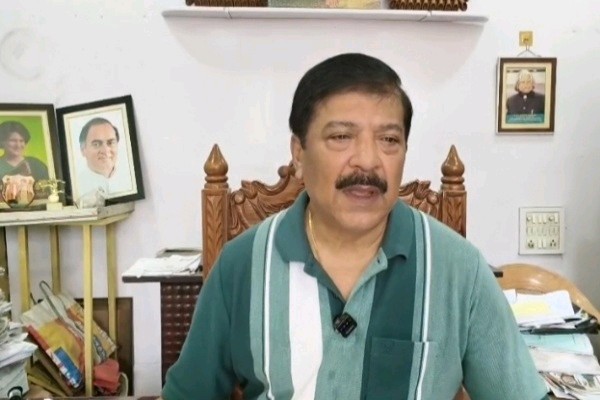
Congress MLA Sudip Roy Barman has questioned the Tripura government’s decision to ban private practice by GB Hospital and AGMC doctors, arguing that healthcare improvement needs stronger management, infrastructure upgrades and accountability systems beyond only restricting doctors’ private consultations.
Quick Glance
- Sudip Roy Barman questioned whether a private practice ban alone can improve public healthcare.
- He highlighted hospital management issues, equipment failures and monitoring gaps.
- He suggested biometric attendance, rotational duty systems and hospital-based paid OPD services.
- He warned that doctor migration could affect medical education and patient care.
Agartala: Congress MLA Sudip Roy Barman has raised serious questions over the Tripura government’s decision to restrict private practice by doctors of GB Hospital and Agartala Government Medical College (AGMC)
Roy Barman said he was not simply opposing or supporting the decision but questioned whether the policy would deliver the promised improvement in public healthcare services.
Speaking to the media including Enewstime, he argued that government hospitals face deeper challenges that require immediate administrative attention.
He pointed to issues such as work culture, shortage of technicians, faulty equipment and weak monitoring systems.
Furthermore, he said healthcare reform should focus on improving the entire hospital system instead of depending only on a single restriction.
Sudip Roy Barman Questions Whether Ban Can Improve Patient Services
The Congress MLA said stopping doctors from private practice would not automatically solve problems faced by patients in government hospitals.
He argued that many hospitals struggle because available equipment remains unused due to lack of technicians or maintenance delays.
According to him, several operational problems continue because there is no effective monitoring mechanism.
Roy Barman suggested that the government should introduce strict duty monitoring.
He proposed biometric attendance systems and stronger supervision to ensure doctors remain available during official working hours.
He also suggested an eight-hour rotational duty structure to improve hospital functioning.
Opposition Seeks Stronger Monitoring Instead of Complete Restriction
Roy Barman said doctors should not engage in private practice during government duty hours.

However, he questioned whether activities after official working hours should be completely prohibited.
He suggested that the government could create paid clinics or private OPD facilities inside hospitals.
According to him, such a system would allow patients who can afford consultation fees to access doctors during evening hours.
Furthermore, it could create an organised structure instead of forcing patients towards private facilities outside the government system.
He said the government needs to explain how the ban would directly improve patient services.
Selective Policy Implementation Raises Political Questions
The Congress MLA questioned why the decision was focused mainly on GB Hospital and AGMC doctors.
He asked why similar restrictions were not applied across other government hospitals.
He specifically referred to institutions such as IGM Hospital and Tripura Medical College.
Roy Barman also raised concerns over doctors moving between institutions on deputation or lien arrangements.
He argued that different rules for different institutions could create confusion in the healthcare system.
Consequently, he called for a more uniform policy framework.
Infrastructure Gaps Remain Key Healthcare Challenge
Roy Barman shifted attention towards hospital infrastructure problems.
He urged the Chief Minister and Health Minister to review conditions at the state’s cancer hospital.
He claimed that important medical equipment, including radiation facilities, PET-CT scan services and mammography machines, had remained non-functional for months.
According to him, improving these services would create a direct benefit for patients.
He said healthcare quality depends on functioning equipment, trained manpower and proper administration.
Doctor Retention Becomes Major Concern After Policy Decision
The Congress MLA also raised concerns over the impact of the decision on experienced doctors.
He warned that some senior doctors may consider retirement or seek opportunities outside Tripura.
Furthermore, he said such a situation could affect medical education and healthcare delivery.
Roy Barman pointed out that Tripura has expanded medical education capacity with increased undergraduate and postgraduate seats.
However, he argued that faculty shortages remain a challenge.
He said losing experienced doctors could create additional pressure on students and patients.
Financial Questions Surround Non-Practising Allowance Increase
Roy Barman questioned whether the increase in Non-Practising Allowance would compensate doctors for the loss of private practice income.
He referred to the increase of NPA from 10% to 20%.
According to him, the financial benefit may not be sufficient compared with the earnings doctors could lose.
He argued that before imposing restrictions, the government should consider providing better professional facilities.
These include improved pay structures, allowances and other support systems.
News Analysis: Enewstime Perspective
The private practice ban debate has developed into a larger discussion on healthcare governance in Tripura.
From a journalist’s perspective, the central question is whether the policy addresses the actual reasons behind public hospital challenges.
The government’s likely argument is that restrictions will increase doctor availability in public hospitals.
However, the opposition has highlighted a different concern — that healthcare improvement requires multiple reforms working together.
Hospital infrastructure, equipment maintenance, staff availability and monitoring systems remain crucial factors.
Furthermore, public response will depend on visible changes after implementation.
If patients experience better services, reduced delays and improved facilities, the policy may gain acceptance.
However, if existing problems continue, political criticism may intensify.
The larger challenge for the Tripura government will be balancing public healthcare needs with doctor retention and institutional stability.
The debate ultimately raises a wider question: can healthcare reform succeed through restrictions alone, or does Tripura need a broader transformation of its public health system?
