

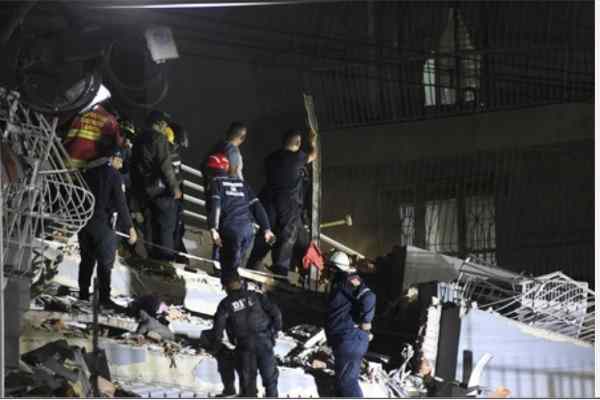
A powerful Venezuela earthquake sequence has raised fresh concerns over seismic preparedness in quake prone Tripura & the Northeast after two major tremors killed at least 32 people and injured more than 700 on June 25, 2026. Authorities declared an emergency as experts highlighted the growing challenge of protecting cities from shallow, destructive earthquakes, IANS Reported.
Quick Glance: Key Takeaways
- Two earthquakes measuring 7.1 and 7.5 magnitude struck Venezuela.
- La Guaira emerged as the worst-affected region with major structural damage.
- Venezuela declared a nationwide State of Emergency after the disaster.
- Experts say earthquake resilience depends on stronger infrastructure and preparedness systems.
Agartala/Caracas (Venezuela): A devastating earthquake sequence in Venezuela has renewed global attention on earthquake preparedness, urban safety, and disaster management systems. The twin tremors struck near Morón, approximately 160 kilometres west of Caracas, creating widespread damage across several regions.
According to the United States Geological Survey, the earthquakes recorded magnitudes of 7.1 and 7.5. The tremors occurred at a shallow depth of around 10 kilometres, increasing the possibility of severe surface damage.
Quoting Venezuelan authorities, IANS reported that at least 32 people died and more than 700 people suffered injuries. However, officials warned that the figures could change as rescue teams continue assessing affected areas.
Several international media claimed the Venezuela earthquake disaster is not only a humanitarian emergency but also a reminder that earthquake-prone regions require continuous investment in safer buildings, emergency planning, and public awareness.
Shallow earthquakes create higher risks for urban populations
The destructive nature of an earthquake depends on several factors, including magnitude, depth, population density, and building quality. Experts often highlight shallow earthquakes as particularly dangerous because seismic energy reaches the surface with greater intensity.
The Venezuela earthquakes demonstrated this challenge. The coastal state of La Guaira suffered extensive damage, with authorities describing the situation as a disaster zone.
Furthermore, several buildings collapsed in parts of the Caracas metropolitan area. Officials warned residents to avoid damaged structures because aftershocks could trigger additional failures.
Speaking to the media including Enewstime, disaster management officials in Tripura noted that modern cities must prepare beyond emergency response. They stressed that prevention through construction standards remains one of the most important earthquake safety measures.
Disaster response systems face pressure after major tremors
Venezuela’s acting President Delcy Rodríguez announced a State of Emergency following the earthquakes.
She said rescue agencies, medical teams, security forces, and civil protection units were deployed nationwide. Additionally, authorities closed Maiquetía Airport after earthquake-related damage.
Interior, Justice and Peace Minister Diosdado Cabello said multiple cities experienced damage.
Consequently, emergency agencies faced the challenge of managing rescue operations while preventing further casualties from damaged infrastructure.
| Earthquake Impact | Details |
|---|---|
| Country affected | Venezuela |
| Major earthquake magnitude | 7.5 |
| Secondary earthquake magnitude | 7.1 |
| Reported deaths | At least 32 |
| Reported injuries | More than 700 |
| Approximate depth | 10 km |
Regional earthquake risks remain a concern beyond Venezuela
The impact of the earthquake was not limited to Venezuela. Reports indicated that tremors were strongly felt in several parts of neighbouring Colombia.
Furthermore, the event again highlighted the wider seismic vulnerability of regions located near active fault systems.
Earthquake experts often emphasize that preparation cannot begin after a disaster happens. Instead, governments must focus on risk mapping, public education, emergency drills, and resilient infrastructure.
Experts also opined, the Venezuela crisis offers lessons for earthquake-sensitive regions worldwide, including areas where population growth is increasing pressure on urban infrastructure.
News Analysis: Enewstime Perspective:
Why Venezuela earthquake is a warning for vulnerable regions
The Venezuela earthquake disaster shows how quickly natural events can become national emergencies. The combination of strong tremors, damaged buildings, and communication problems created challenges for authorities.
However, the larger question is preparedness. Earthquakes cannot be prevented, but their human impact can be reduced through planning.
Furthermore, governments worldwide are increasingly focusing on early warning systems and stronger construction rules.
Earthquake Risk Analysis: Lessons for Tripura and Northeast India
The Venezuela disaster also brings attention to earthquake vulnerability in regions like Tripura and Northeast India, which fall under high seismic risk zones.
Experts have repeatedly highlighted that the Northeast faces challenges due to active geological structures, rapid urban development, and infrastructure expansion.
The lesson from Venezuela is clear: earthquake preparedness must involve stronger buildings, updated safety standards, community training, and effective emergency communication networks.
Specifically, growing towns and cities in seismic regions require long-term planning instead of only post-disaster relief strategies.
Expert Outlook: Building resilience before the next earthquake
The Venezuela earthquake tragedy underlines a major global reality: seismic disasters are not only natural events but also tests of governance, infrastructure quality, and public preparedness.
Furthermore, countries facing earthquake risks must continuously improve:
- Building safety regulations
- Emergency response capacity
- Public awareness programmes
- Scientific monitoring systems
The future of earthquake management depends on reducing vulnerability before disasters strike.
The Venezuela experience serves as a reminder that preparedness remains the strongest defence against seismic uncertainty. (With IANS inputs)
