


As a sacred shakti tradition and practice, the Kamakhya Temple in Guwahati reopened on June 26, 2026, after the conclusion of the three-day Ambubachi Mela observance. The annual festival, linked with Goddess Kamakhya’s sacred cycle, highlights Shakti worship, fertility symbolism and centuries-old traditions.
Quick Glance: Key Takeaways
- Kamakhya Temple reopened after a three-day traditional closure during Ambubachi Mela.
- The observance began with the Pravritti ritual on June 22, 2026.
- Devotees returned to Nilachal Hills to seek blessings and sacred offerings.
- The festival represents feminine creative power and Mother Earth symbolism.
Agartala/Guwahati: The reopening of Kamakhya Temple in Guwahati after the conclusion of Ambubachi Mela 2026 has once again brought global attention to one of India’s most distinctive spiritual traditions. The three-day religious observance ended with the restoration of public access following customary rituals.
According to our Reporter from Guwahati, devotees began gathering at the shrine after the temple doors reopened following the Nitya Puja. Pilgrims arrived to receive sacred offerings associated with the festival, including Angodak and Angabastra.
The festival remains unique because it connects spirituality with the natural cycle of creation. Unlike many religious gatherings focused only on rituals, Ambubachi Mela carries a deeper cultural message linked with fertility, regeneration and respect for feminine energy.
The Religious Meaning Behind Ambubachi Mela Tradition
Ambubachi Mela is annually organised at Kamakhya Temple in Guwahati, Assam. The festival revolves around the belief that Goddess Kamakhya, considered a manifestation of divine feminine power, undergoes her annual menstrual cycle during this period.
During these three days, temple activities inside the sanctum remain suspended. Devotees traditionally wait outside the shrine while the symbolic resting period continues.
Furthermore, the practice reflects an ancient understanding of fertility and creation. The festival connects the goddess with the fertility of Mother Earth, making it an important event among followers of Shakti traditions.
The temple reopened after the completion of the sacred observance, allowing devotees to resume worship. Shrine authorities confirmed that arrangements were made to manage the expected crowd movement and maintain order.
Why Kamakhya Temple Remains Different From Other Pilgrimage Centres
Located on Nilachal Hills, Kamakhya Temple holds a special position among India’s Shakti Peethas. The shrine attracts devotees, spiritual seekers and researchers interested in religious traditions.
However, the distinctive feature of Ambubachi Mela is its interpretation of menstruation as a powerful symbol of creation rather than a subject of social silence.
Consequently, the festival has gained attention beyond religious circles. Cultural observers often describe it as an example of how traditional belief systems represent the relationship between nature, womanhood and divine energy.
In addition, the gathering has become an important cultural identity marker for Assam and the wider Northeast region.
Sacred Offerings and Devotee Participation After Reopening
Following the reopening, devotees gathered to receive the revered Angodak and Angabastra, which hold deep religious significance among followers.
The return of worship activities transformed the temple surroundings into a centre of spiritual movement. Pilgrims from different parts of India and abroad participated in prayers and traditional practices.
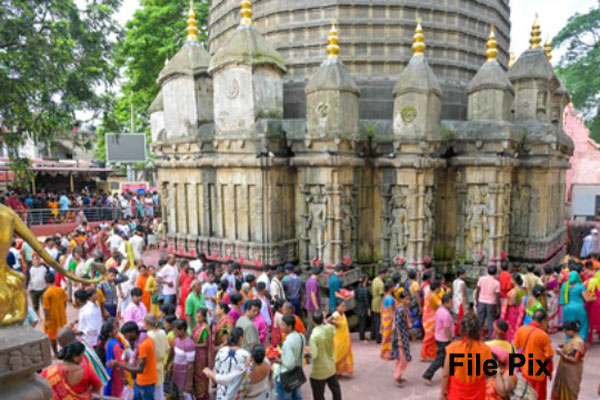
The atmosphere around Nilachal Hills reflected a combination of devotion, cultural celebration and community participation. Enewstime sources in Guwahati said, the festival provides a platform where religious heritage and local traditions meet. Small traders, service providers and tourism-linked communities also experience increased activity during the event period.
Ambubachi Mela’s Cultural Importance for Northeast India
Beyond religious practices, Ambubachi Mela represents the cultural heritage of Assam. The event showcases the historical influence of Shakti worship in the region.
Specifically, the festival demonstrates how ancient traditions continue to remain relevant in modern society. Thousands of visitors participate every year, making it one of eastern India’s major spiritual gatherings.
Speaking to Enewstime Desk in Agartala, devotees from Tripura highlighted the need for sustainable management of large religious gatherings. Crowd management, environmental protection and infrastructure planning remain important factors for future editions.
News Analysis: Enewstime Desk Perspective
In the era of a highly tech-driven world, the continued popularity and growing devotion among people to the Kamakhya Temple show the strength of India’s living traditions. Enewstime Desk strongly propagates nurturing and preserving the spiritual traditions of the country to lead a better life in the crisis-ridden modern times. Future planning must combine cultural preservation with scientific risk management with a focus on access to hygyne and steps to combat the possibility of environmental degradation.
Consequently, authorities across the Northeast may need to focus on:
- Earthquake-resistant public infrastructure
- Regular safety audits at major gathering sites
- Monitor environmental impact and take steps to protect the local ecology
- Stronger coordination between the administration and local communities
The Ambubachi Mela story is therefore not only about faith. It also reflects the broader challenge of protecting cultural spaces in a region shaped by both natural beauty, biodiversity, and geological sensitivity.
