

Tripura Chief Minister Dr Manik Saha reiterated the government’s pilot policy restricting private practice by AGMC and GB Pant Hospital doctors, saying a proposed 20% incentive aims to improve doctor availability, strengthen medical education and enhance public healthcare services amid debate among doctors, political parties and common people.
Quick Glance: Key Takeaways
- Tripura Government introduced private practice restrictions at AGMC and GB Pant Hospital on a pilot basis.
- CM Dr Manik Saha said a 20% additional financial benefit is being considered for eligible doctors.
- A section of super-speciality doctors opposed the move and submitted a memorandum.
- BJP-affiliated doctors’ organisation supported the decision, while Congress criticised the policy.
Agartala: The controversy surrounding the Tripura Government’s decision to restrict private practice by doctors and faculty members of Agartala Government Medical College (AGMC) and GB Pant Hospital has gained momentum, with doctors, political parties and healthcare stakeholders presenting different views.
According to our Enewstime Reporter Agartala, the debate widened after a section of super-speciality doctors raised objections to the move and submitted a memorandum to the Medical Superintendent of AGMC and GB Pant Hospital.
Meanwhile, Congress leaders criticised the decision, claiming that the restriction could affect specialist healthcare services in the state.
However, the BJP-affiliated doctors’ organisation welcomed the move, stating that stronger institutional availability of doctors would benefit patients and medical education.
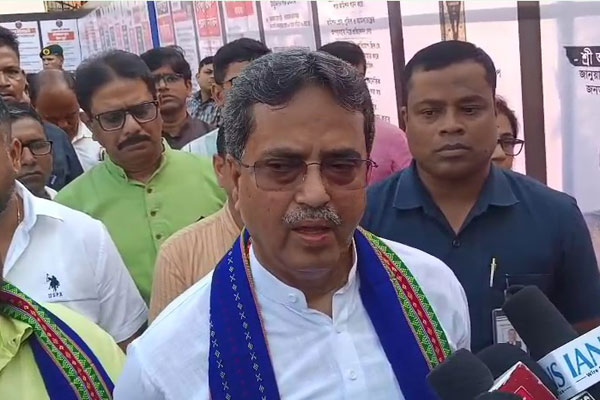
Amid the debate, Chief Minister Dr Manik Saha said the government’s objective was not to create pressure on doctors but to improve healthcare delivery through better availability of medical professionals.
CM Links Policy With Medical Education Expansion
Dr Saha connected the pilot private policy with Tripura’s expanding healthcare and medical education infrastructure.
He said the state now has around 550 MBBS seats, improving the availability of locally trained doctors.
“Earlier, getting specialists in Tripura was difficult. Now specialists are coming and many students are from Tripura itself,” he said.
The Chief Minister added that the government is exploring possibilities of introducing advanced medical education programmes, including MCh and DM super-speciality courses in Agartala.
He said that increased institutional involvement of doctors will support both healthcare services and future medical education growth. The government believes the incentive-based approach will help strengthen healthcare delivery, improve patient access and create better academic opportunities in the state’s medical institutions.
CM Saha Highlights Profession At Medical College
The Chief Minister said working in a medical college carries a distinct professional satisfaction for doctors, as they get the opportunity to teach future medical professionals while continuing clinical services. Dr Saha said the government was considering providing an additional 20% salary incentive to doctors of medical colleges as compensation for restricting private practice, so that they could devote more time to teaching and patient care.
However, he pointed out that doctors often have to balance academic responsibilities with patient care, and the availability of super-specialists and senior doctors has remained a challenge in some cases.
“After examining the systems followed by various medical colleges across the country, the government considered the provision under the Seventh Pay Commission, which allows additional payment if private practice is restricted,” he said.
Dr Saha said the decision was taken after reviewing practices in different states and medical institutions and was being introduced on a pilot basis at AGMC and GB Pant Hospital.
He said the proposal is based on provisions linked with the Seventh Pay Commission framework, where additional compensation can be considered when doctors are restricted from private practice.
| Policy Component | Details |
|---|---|
| Pilot Institutions | AGMC and GB Pant Hospital |
| Proposed Benefit | 20% additional incentive/NPA consideration |
| Objective | Improve doctor availability for teaching and patient care |
| Decision Status | Pilot implementation |
| Possible Expansion | Other government hospitals including IGM Hospital |
Dr Saha said the government examined healthcare models followed by several states before introducing the pilot initiative.
“Doctors working in medical colleges have to manage teaching responsibilities along with clinical duties. Ensuring their availability is important for both students and patients,” he said.
Health Secy Defends the Move
Citing examples from other states, the Health Secretary said governments in states such as Bihar, Haryana, Himachal Pradesh and Maharashtra have imposed a complete ban on private practice by government doctors. He added that states including Kerala, Jharkhand, Chhattisgarh, Andhra Pradesh and Rajasthan have placed restrictions on private practice by doctors working in medical colleges and administrative positions.
He also referred to a report submitted by M Srinivas after his visit to AGMC and GB Pant Hospital last year. The report recommended stopping private practice by doctors of the institutions to improve the quality of medical education and healthcare services and to develop AGMC as a Centre of Excellence.
Gitte said Chief Minister Manik Saha held detailed discussions with the All Tripura Government Doctors’ Association and AGMC Teachers’ Forum on June 21. Both organisations supported the decision and suggested measures including timely promotions, academic support and research facilities.
The Health Secretary said the government is working on amendments to the Tripura Medical Education Service Rules to create sufficient posts and ensure timely promotions for faculty members.
Difference of Opinions
The policy has created a mixed response within the medical community.
A section of super-speciality doctors has expressed concern over the restriction, raising questions about professional choices and possible impact on specialist services.
Congress leaders have also opposed the decision, arguing that the move may create challenges in retaining experienced specialists within government hospitals.
However, supporters of the policy believe that medical colleges should remain focused on academic activities, research and institutional healthcare.
The BJP-backed doctors’ body supported the government’s position and stated that restricting private practice could increase the presence of doctors inside government healthcare institutions.
Consequently, the debate has shifted from the policy itself to questions surrounding implementation, compensation and long-term healthcare outcomes.
Government Says No Force Will Be Applied on Doctors
Clarifying the government’s stand, Dr Saha said the arrangement would not be imposed through pressure.
He said doctors who accept the proposed benefit can participate, while those who do not want to join will have an option.
“Nothing can be done through force. The government is considering this in public interest,” he said.
The Chief Minister also acknowledged that the financial incentive may not completely match earnings doctors receive through private practice.
However, he said the government is attempting to create a balanced system within existing legal provisions.
Furthermore, he stated that doctors had also raised issues related to promotions and professional development, and the government would examine those matters according to rules.
News Analysis: Enewstime Desk’s Perspective
The private practice debate of AGMC-GB Pant Hospital Doctors reflects a larger administrative challenge faced by many states — balancing public healthcare obligations with doctors’ professional expectations.
Tripura’s government is presenting the move as a healthcare availability reform. The main issue is the states where such a ban on private practice exists are much larger and more resource-rich states than tiny and land-locked Tripura. With limited scopes and opportunities in Tripura, it would be a tough challenge for the civil and hospital administrations to implement the ban effectively, benefiting both patients and medical practitioners.
“Come what, you can not ask anybody to work for more than 8 hours. In that case, what will a doctor do in his free time?”, asked a retired doctor on condition of anonymity.
According to Enewstime Desk, the coming months will be crucial as they will show whether the pilot model improves patient access without creating new workforce challenges. With so many questions remaining unanswered, medical practitioners and patients, as well as the medical students, hope that things will be rolled out smoothly without affecting anyone’s interests.
