

Fish farming and ginger cultivation are emerging as reliable sources of income for tribal families in Tripura under the Tripura Rural Economic Growth and Service Delivery Project (TRESP). A field visit by Tribal Welfare Secretary Dr. K. Sashi Kumar to Damcherra RD Block on Sunday highlighted how community-based producer groups are adopting scientific farming practices and improving their livelihoods with government support.
Agartala: Fish ponds are turning into income generators. Ginger fields are creating new opportunities for tribal farmers. Across parts of North Tripura, the Tripura Rural Economic Growth and Service Delivery Project (TRESP) is helping rural families build sustainable livelihoods through community-based farming initiatives.
The progress became evident during a field visit by Tribal Welfare Department Secretary Dr. K. Sashi Kumar, IFS, to Damcherra RD Block on Sunday. The visit focused on reviewing the implementation of TRESP and understanding its impact on producer groups working in fisheries and agriculture.
Government Reviews Progress on the Ground
The Secretary began his visit with a review meeting at the office of the Block Development Officer (BDO), Damcherra RD Block.
Officials from TRESP, the Block Development Office and the Forest Department attended the meeting. The Sub-Divisional Forest Officer of Dharmanagar also joined the review.
Dr. Kumar assessed the progress of livelihood activities under the project. He asked officials to maintain coordination among departments and ensure timely implementation of every intervention.
He also stressed the importance of maintaining quality standards so that rural communities receive long-term economic benefits.
Fish Farming Creates New Income Opportunities
One of the key stops during the visit was the Vangsang Fishery Producer Group under the West Damcherra Village Committee.
The group has been developing fish farming as a collective livelihood activity under TRESP.
Dr. Kumar inspected the group’s records and observed the harvesting of fish fingerlings. He interacted with the members to understand their work and future plans.
He appreciated the commitment shown by the members. He encouraged them to continue scientific fish farming practices and improve pond management.
According to officials, scientific fish culture can increase production, reduce losses and generate steady income for rural households. Collective farming also helps members share resources and reduce production costs.
The Secretary said sustainable fish farming has significant potential to strengthen the rural economy while improving food security in tribal areas.
Ginger Cultivation Gains Momentum
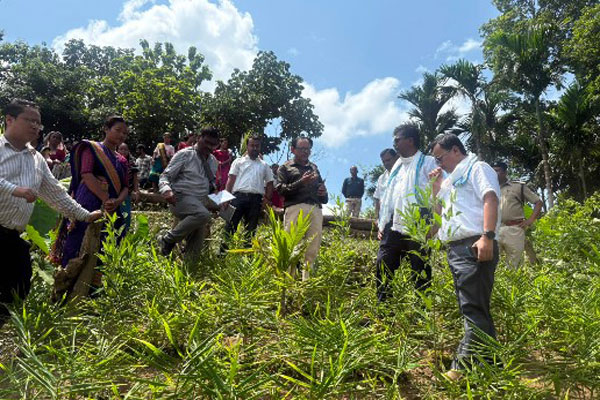
The delegation also visited the Khasnam Agriculture Producer Group under the Thumsarai Para Village Committee.
The group has successfully taken up ginger cultivation with support from TRESP.
During the visit, the Secretary reviewed the progress of cultivation and interacted with farmers working in the fields.
Discussions focused on improving productivity, adopting better farming techniques and expanding access to markets.
He encouraged farmers to increase cultivation and explore value-added opportunities that could generate higher returns.
Officials believe that improved market linkages and technical guidance can help producer groups secure better prices for their produce and strengthen rural incomes.
Producer Groups at the Centre of Rural Development
TRESP promotes community-based development by organising farmers into Producer Groups.
These groups receive technical support, training and institutional guidance to improve production and marketing.
The model allows members to work collectively while sharing knowledge and resources.
Officials say such an approach reduces risks for small farmers and creates better opportunities for income generation.
Both the fishery and agriculture groups visited by the Secretary demonstrated how collective efforts can produce measurable economic gains.
Beneficiaries Share Positive Experiences
Members of the producer groups shared their experiences with the visiting officials.
They said TRESP has helped them adopt improved farming practices and strengthened their confidence in pursuing agriculture and fisheries as sustainable livelihoods.
Beneficiaries also highlighted the importance of regular technical support and institutional guidance.
They expressed hope that continued assistance would help them expand their activities and improve their earnings in the coming years.
Focus on Sustainable Tribal Livelihoods
Dr. Kumar reiterated the State Government’s commitment to strengthening tribal livelihoods through sustainable development initiatives.
He said projects such as TRESP are designed to improve income generation while building the capacity of rural communities.
He also underlined the importance of better infrastructure, skill development and institutional support for long-term economic growth in tribal regions.
The Secretary noted that regular field visits help officials understand local challenges and monitor the progress of development programmes more effectively.
A Model for Inclusive Rural Growth
The visit to Damcherra reflected the broader objective of TRESP to transform rural livelihoods through locally suitable economic activities.
Fish farming and ginger cultivation have emerged as practical examples of how targeted interventions can create lasting economic opportunities for tribal communities.
As more producer groups adopt scientific techniques and strengthen market connections, these initiatives are expected to contribute to higher rural incomes and more resilient local economies across Tripura.
With sustained government support and active community participation, TRESP continues to demonstrate how livelihood-focused development can improve the quality of life in tribal areas while promoting inclusive and sustainable rural growth.
