

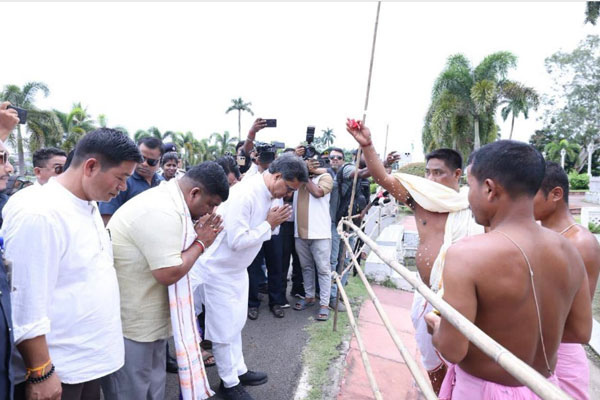
Ker Puja, one of the ancient tribal festivals in Tripura, continues to preserve the state’s rich indigenous heritage while symbolising peace, protection and prosperity. As this year’s rituals began at the historic palace compound in Agartala, Chief Minister Prof. (Dr) Manik Saha reaffirmed the government’s commitment to safeguarding the centuries-old tradition and promoting cultural harmony.
Quick Glance
- Ker Puja is among Tripura’s oldest and most sacred tribal festivals.
- Chief Minister Dr Manik Saha visited the ritual site on Tuesday.
- The government reiterated its commitment to preserving indigenous heritage.
- The festival seeks divine protection from disease, disasters and misfortune.
- ‘Ker’ means boundary in Kokborok and symbolises a sacred protected space.
Agartala, August 04: Long before modern governance took shape in Tripura, Ker Puja stood as a sacred ritual invoking divine protection for the land and its people. Today, centuries later, the ancient tradition continues to define the state’s cultural identity while reflecting its commitment to preserving indigenous heritage.
The annual festival commenced at the palace compound in Agartala, where Chief Minister Prof. (Dr.) Manik Saha joined devotees and witnessed the rituals. Addressing the media later, he described Ker Puja as a priceless heritage festival that has remained deeply connected with the emotions and traditions of the people of Tripura.
An Ancient Tradition Rooted in Indigenous Beliefs
Ker Puja occupies a unique place in Tripura’s cultural landscape. Celebrated about two weeks after the famous Kharchi Puja, the festival is dedicated to Ker, regarded as the guardian deity of the state and the erstwhile royal family.
The word ‘Ker’ comes from the Kokborok language and means “boundary” or “specified enclosure.” During the ritual, priests create a sacred boundary that symbolically becomes the abode of the deity.
The boundary also defines a protected ritual space. Traditionally, no one may enter or leave the designated area until the ceremonies conclude. The practice reflects centuries-old indigenous beliefs that seek divine blessings for collective well-being.
Speaking on the occasion, the Chief Minister recalled that such traditions were once observed across different parts of Tripura. Over the years, however, the celebrations gradually became confined to the palace compound, where the royal-era rituals continue to survive.
Prayers for Peace, Prosperity and Protection
Unlike many festivals that focus on individual worship, Ker Puja centres on the welfare of the entire state.
According to traditional belief, the rituals seek protection from epidemics, diseases, floods, natural disasters and other calamities. Devotees also pray for peace, prosperity and good health for all citizens.
Chief Minister Saha said Ker Puja essentially represents Vastu worship, a practice that dates back to the days of the Manikya kings. He noted that generations of people in Tripura have remained emotionally connected with this sacred festival since childhood.
The continuity of the tradition, he said, demonstrates the enduring strength of Tripura’s cultural heritage.
Strict Rituals Make Ker Puja Unique
Ker Puja is widely recognised for its disciplined observance and strict customary regulations.
Once the sacred boundary is established, traditional restrictions come into force for the designated ritual period. Entry into and exit from the enclosed area remain prohibited. Several customary practices also regulate daily activities within the boundary.
The ceremonies are led by the royal priest, known as the Chantai, along with assistant priests called Kantaia. Every ritual follows established customs that have been preserved through generations.
These unique traditions distinguish Ker Puja from most other festivals in India and continue to attract cultural and historical interest.
Government Reaffirms Commitment to Tribal Heritage
Highlighting his government’s approach towards indigenous traditions, the Chief Minister said every festival deserves equal respect irrespective of the community that celebrates it.
He observed that people from different communities come together during such occasions, strengthening social harmony and reinforcing the feeling that all citizens belong to one family.
“Our government has taken special care to respect tribal festivals as well as rituals inherited from the royal era,” he said.
He added that the state had organised the festival with grandeur last year and would continue extending support to preserve Tripura’s unique cultural legacy.
Ker Puja also continues to receive official patronage under the historic arrangements that followed Tripura’s merger with the Indian Union, ensuring that this centuries-old state ritual remains an important part of the region’s living heritage.
Preserving a Living Cultural Legacy
As rapid urbanisation and changing lifestyles reshape traditional societies, festivals like Ker Puja continue to serve as living reminders of Tripura’s indigenous identity.
Beyond its religious significance, the festival reflects the state’s historical journey, royal traditions and cultural diversity. It also demonstrates how ancient customs can remain relevant in contemporary society through community participation and institutional support.
Extending greetings on the occasion, Chief Minister Saha expressed hope that the people of Tripura would continue working together for the state’s progress while upholding the spirit of unity and inclusive development.
The programme was attended by MLA Abhishek Debroy, noted social worker Bipin Debbarma and several other dignitaries.
For Tripura, Ker Puja remains more than a religious ceremony. It is a living heritage that continues to connect the state’s past with its present while preserving traditions that have endured for centuries.
