

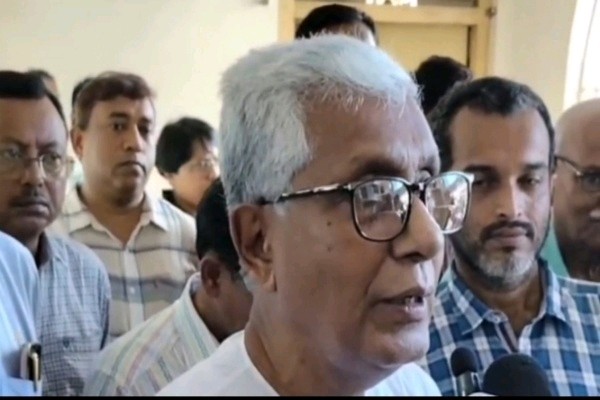
Veteran CPIM leader and former Tripura Chief Minister Manik Sarkar has raised questions over the power sector management of the State. He alleged that consumers, especially poor families, are facing hardship despite Tripura having adequate electricity generation capacity. Sarkar also urged the government to address infrastructure and consumer grievances immediately.
Quick Glance
- Manik Sarkar questioned the management of Tripura’s power sector.
- He alleged that poor consumers are bearing the burden of electricity-related problems.
- Sarkar claimed Tripura had earlier emerged as a power-surplus state.
- He raised concerns over electricity infrastructure and consumer complaints.
- He opposed attacks on power offices and public property.
- He called for organised and peaceful consumer protests.
Sarkar Questions Electricity Management
Agartala August 08: Manik Sarkar criticised the Tripura government over the way it is handling the electricity sector.
He alleged that consumers are paying the price for problems in the system.
Sarkar particularly highlighted the impact on poor households. He claimed that people are being forced to spend more because of issues linked to electricity services.
He also questioned the government’s repeated announcements on the power sector.
According to Sarkar, the government must focus on actual delivery instead of relying mainly on speeches and publicity.
‘Tripura Does Not Face Power Shortage’
Sarkar disputed the suggestion that Tripura faces an electricity shortage.
He recalled the achievements of the earlier Left Front government. He said Tripura had worked through sustained efforts to become one of the few power-surplus states in the country.
Sarkar said the state’s generation capacity had once allowed it to supply electricity to other parts of the Northeast.
He also claimed that the Central government had earlier discussed taking electricity from Tripura to Delhi and Uttar Pradesh.
Against this backdrop, he questioned why the state is now struggling to maintain its existing power-generation capacity.
He argued that Tripura does not need to start from scratch.
Instead, the focus should be on properly maintaining and utilising the infrastructure and generation capacity already created.
Questions Ground-Level Infrastructure
Sarkar also questioned the condition of electricity infrastructure.
He referred to problems involving electricity poles and connections. He asked why such infrastructure was not being properly installed, repaired or maintained.
The former Chief Minister said consumers need reliable electricity at the ground level.
He urged the government to examine complaints instead of limiting the response to official statements.
Raises Concern Over Power Disconnection
Sarkar also referred to a reported incident near Boraraj Chowmuhani.
He said a newspaper report highlighted a dispute involving property owners and an electricity connection.
According to Sarkar, the electricity supply to a house was allegedly disconnected amid the dispute.
He questioned the justification for cutting electricity to people who had purchased properties and were occupying their homes.
Sarkar said such disputes should not result in ordinary consumers losing access to electricity.
He said he strongly opposed such actions.
Supports Consumer Organisation
Sarkar said electricity consumers in Tripura are increasingly organising themselves.
He referred to a consumer organisation that has been submitting petitions and representations to authorities.
According to him, consumers are now organising at the subdivision level.
They are also submitting their demands before the administration.
Sarkar said public frustration is growing because of electricity-related difficulties.
He urged consumers to remain united and put democratic pressure on the government.
Opposes Attacks on Power Offices
At the same time, Sarkar opposed attacks on electricity offices and other public property.
He said reports had emerged of attacks on offices at some places amid growing public anger.
Sarkar made it clear that he does not support such actions.
He urged people to put pressure on the government through peaceful and organised movements instead.
“Attacking offices and damaging public property is not right,” he said.
He pointed out that public infrastructure belongs to the people.
Such facilities are built using public money. Damaging them ultimately affects consumers themselves.
‘Electricity Cannot Be Treated as a Game’
Sarkar stressed the importance of reliable electricity in modern life.
He said electricity is essential for almost every sector.
Hospitals, businesses, homes and public institutions all depend on uninterrupted power supply.
Therefore, he argued that the government cannot treat electricity-related issues casually.
He called for immediate and effective action to address consumer grievances.
Sarkar also urged people to organise themselves and press the government to correct shortcomings in the power sector.
Focus Shifts to Consumer Accountability
Sarkar’s remarks come amid growing attention to electricity-related consumer concerns in Tripura.
His central argument was that the government should move beyond announcements and focus on service delivery.
He called for better management of existing power infrastructure and a stronger response to consumer complaints.
He also maintained that public anger should remain within democratic and peaceful limits.
For consumers, the immediate concern remains simple: reliable electricity, functioning infrastructure and a transparent system for resolving complaints.
Sarkar expressed hope that the Tripura government would take effective measures without delay.
