

Tripura is seeking to make rural skill training more closely reflect real job opportunities as automation and new technologies reshape the employment market. A TRLM-led Industry 5.0 initiative has brought employers, universities and training agencies together to improve the link between skills and jobs under DDU-GKY 2.0.
Quick Glance:
- TRLM and Tripura University organised a two-day Industry 5.0 programme.
- The initiative focused on improving DDU-GKY 2.0 implementation.
- More than 20 organisations joined the CXO Meet.
- Employers discussed skills needed in retail, hospitality, healthcare and other sectors.
- TRLM aims to strengthen placement-oriented training for rural youth.
- The programme stressed stronger industry-academia-skilling partnerships.
Agartala, August 14: The Tripura Rural Livelihood Mission (TRLM) has stepped up efforts to connect rural skill development with changing industry requirements. The initiative comes as employers increasingly seek workers who can adapt to technology, digital systems and evolving workplace practices.
TRLM, in collaboration with the Department of Rural Studies at Tripura University, organised a two-day programme on August 11 and 12. The programme centred on Industry 5.0 and the effective implementation of the Deen Dayal Upadhyaya Grameen Kaushal Yojana (DDU-GKY 2.0).
The programme included a National Conference titled “Industry 5.0: Skill India to Start Up India” on the first day. A CXO Meet, or Industry Meet, followed on the second day.
Industry 5.0 Focus Brings Academia Into the Discussion
Tripura University Vice-Chancellor Prof. Debabrata Das inaugurated the programme. The event brought together representatives from academia, industry, skill development institutions, TRLM and DDU-GKY Project Implementing Agencies.
The first day focused on academic discussions and paper presentations. Scholars and academicians from several institutions participated.
These included Rabindra Bharati University, Bankura University, G.B. Pant University of Agriculture & Technology, Tripura University and Tezpur University. The Indo Bangal Chamber of Commerce Tripura Chapter also took part.
Discussions examined Industry 5.0, entrepreneurship and emerging skill requirements. Participants also considered how technological changes are altering the employment landscape.
The central message was clear. Rural youth need more than conventional qualifications. They need practical skills that match current and future workplace requirements.
CXO Meet Targets the Training-Employment Gap
The second day shifted the focus from academic discussion to direct engagement with employers.
More than 20 organisations participated in the CXO Meet. The gathering included employers, industry representatives, skill development institutions, TRLM officials and DDU-GKY Project Implementing Agencies.
Representatives from NSDC Guwahati, SIPARD, the Tripura Rubber Board, ILS Hospitals and NSE joined the panel discussion. They shared views on employability, industry expectations and emerging employment opportunities.
Local employers also participated. The list included V-Mart, PRAN Food & Beverages, Jain Udyog, Hotel Airdrop, Hotel Noah Spire, Vision Plus Security and NSE Ltd.
The interaction addressed a longstanding challenge in vocational training. Training programmes can lose their impact when their courses do not match actual employer demand.
TRLM’s industry-focused approach seeks to narrow that gap.
From Training Centres to Real Job Opportunities
For rural youth, closer employer participation can improve the connection between training and employment.
Instead of relying only on broad vocational courses, DDU-GKY 2.0 can use industry feedback to identify skills required in specific sectors. These include retail, hospitality, healthcare, food processing and rubber-based industries.
Such alignment can also help Project Implementing Agencies understand recruitment standards before designing training modules.
The approach could make placement outcomes a stronger measure of skilling programmes. It can also help rural candidates prepare for jobs that exist in regional and wider markets.
TRLM Pushes a New Skilling Model
TRLM CEO Tarit Kanti Chakma, IAS, highlighted the need to expand participation in skill development during the closing ceremony.
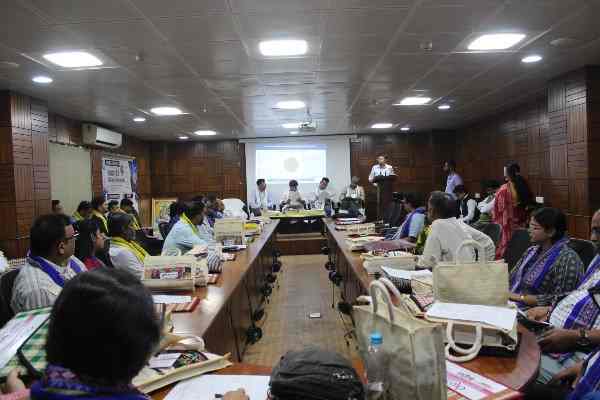
He called for a new approach to skilling that can bring more young people into employment-oriented programmes. He also linked skill development with livelihood creation and improved economic conditions for rural households.
The programme highlighted the importance of cooperation among government missions, universities and employers. Such partnerships can help create a more responsive skilling ecosystem in Tripura.
The organisers also distributed certificates and prizes to paper presenters during the closing ceremony.
The larger test now lies in implementation. If industry feedback becomes part of training design and placement planning, DDU-GKY 2.0 could create a stronger pathway from rural classrooms to sustainable employment.
For Tripura, the Industry 5.0 discussion therefore goes beyond technology. It points to a broader effort to ensure that rural youth acquire skills that employers actually need.
