

Entrepreneurs in districts could soon get closer access to mentors, investors, academic institutions and industry networks as the Tripura Government plans a regional startup hub model. The initiative seeks to spread innovation and entrepreneurship beyond Agartala and create a more connected startup ecosystem across Tripura.
3 Key Takeaways:
- Tripura plans regional startup hubs under a hub-and-spoke model to connect districts with academia, industry and investors.
- The initiative aims to expand innovation, incubation, investment and market access beyond Agartala.
- Regional hubs will complement T-Nest and T-Rice as Tripura builds a statewide startup ecosystem.
Agartala, August 17: The Tripura government plans to expand its startup ecosystem beyond the state capital through a network of proposed regional startup hubs.
Director of Information Technology J.R. Geshan B said the initiative will connect districts with academia, industry, investors and other ecosystem partners. The plan aims to create wider access to innovation, incubation, investment and market opportunities.
The proposal forms part of the government’s broader strategy to strengthen entrepreneurship across Tripura.
Regional Hubs to Connect Districts
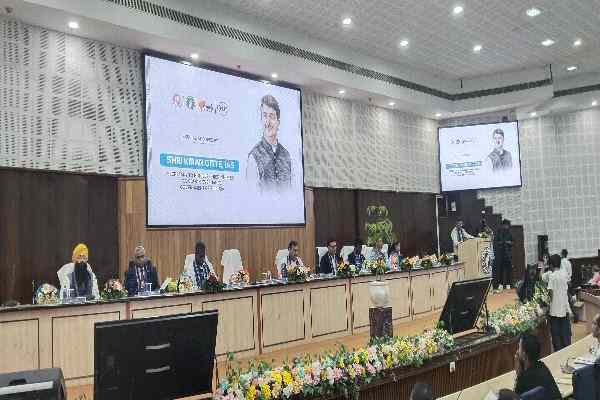
Geshan outlined the regional startup hub proposal while speaking at the “Building a Unicorn in Tripura” workshop organised by the Directorate of Information Technology in collaboration with T-Hub.
He said the regional hubs have been proposed in the state Budget speech. The Directorate of Information Technology will oversee the initiative.
The hubs will follow a hub-and-spoke model. They will link districts with key institutions and stakeholders in the startup ecosystem.
The government wants this model to reduce the concentration of startup support in Agartala. Entrepreneurs in other parts of Tripura will also get access to structured opportunities.
Focus on Innovation and Incubation
The proposed hubs will support innovation and incubation at the regional level.
They will connect aspiring entrepreneurs with academic institutions and industry partners. They will also create pathways to investors and other ecosystem organisations.
This approach could help young entrepreneurs develop ideas closer to their home districts.
It could also make it easier for startups to find mentors and technical support without depending entirely on institutions based in Agartala.
Geshan said the broader objective is to promote innovation, incubation, investment and market access across Tripura.
Taking Startup Support Beyond Agartala
Tripura’s startup ecosystem has been developing around policy support and institutional initiatives.
The state launched Tripura Startup Policy and startup portal on January 24, 2025. The policy offers financial and non-financial support to startups across sectors and stages.
The government has also established T-Nest as a state-level incubation centre. T-Nest is designed to provide infrastructure, mentorship and resources to startups.
However, a strong state-level ecosystem also needs wider geographical reach.
The proposed regional hubs are intended to address this gap.
Geshan stressed that startup opportunities should not remain limited to the capital.
“We want the startup ecosystem to be accessible not just from the capital, but from across the state,” he said.
Regional Network to Support Entrepreneurs
The hub-and-spoke model could create a wider network for Tripura’s entrepreneurs.
District-level institutions could act as local access points. They could identify promising ideas and connect entrepreneurs with larger ecosystem partners.
Academic institutions could contribute research, skills and technical expertise. Industries could provide market knowledge and business opportunities.
Investors and mentors could help promising ventures prepare for growth.
Such connections can become particularly important for startups that need support beyond the initial idea stage.
Linking Local Ideas With Investment
Access to capital remains a key part of startup growth.
The proposed regional hubs are expected to connect entrepreneurs with investors and other funding-related opportunities.
This could help promising startups move from prototypes to commercial ventures.
| You may also like: Tripura Pushes Startup Ecosystem With Unicorn-Building Vision |
The initiative also fits into the state government’s wider effort to create an end-to-end startup ecosystem.
Tripura has reported 187 startup applications under its policy. Of these, 70 have received recognition. Around 29 startups have reached the proof-of-concept or prototype stage.
The government has also disbursed around ₹3.53 crore in financial assistance, according to the IT Director.
Market Access a Key Priority
Funding alone cannot guarantee startup success.
Entrepreneurs also need customers and market connections.
The proposed regional hubs will therefore focus on market access along with innovation, incubation and investment.
This could help district-based entrepreneurs identify markets outside their immediate areas.
The state is also working on T-Rice, an integrated digital platform for its startup ecosystem. The platform aims to connect startups with mentors, incubators, investors, corporates, academia and government agencies.
Together, the regional hubs and T-Rice could create both physical and digital access points for entrepreneurs.
Connecting Districts With National Ecosystem
The regional hub initiative is also expected to complement Tripura’s efforts to connect local startups with the national ecosystem.
The government has proposed a Tripura Innovation and Startup Summit. The summit would provide a platform for startups to showcase their ventures to investors, corporates and ecosystem partners from outside the state.
The state has also partnered with organisations such as T-Hub to strengthen knowledge and mentorship support.
Geshan said Tripura’s long-term objective is to move from local ideas to national and eventually global partnerships.
Building Opportunities Across Tripura
The regional startup hub plan represents a shift towards a more decentralised entrepreneurship ecosystem.
Instead of concentrating support in Agartala, the government wants districts to become active parts of the startup network.
The success of the initiative will depend on how effectively the hubs connect entrepreneurs with mentors, institutions, capital and markets.
For Tripura’s emerging startup community, the proposed network could create new opportunities closer to home.
The government’s larger ambition is clear. It wants Tripura to become a place where entrepreneurs can develop ideas, build businesses and scale them without having to leave the state.
