

Students in remote parts of Tripura will gain access to live classroom instruction from teachers through a new digital education initiative.
The state government has introduced virtual classrooms in 240 schools to improve access to specialised teaching and reduce the education gap between remote and urban areas.
Key Takeaways
- Tripura has launched virtual classroom facilities in 240 remote schools across the state.
- Around 40,000 students are expected to benefit from live lessons in Mathematics, Science and English.
- The two-way system will allow students in remote areas to interact directly with teachers based in a central studio.
Virtual Classrooms Reach Remote Schools
Tripura has taken a major step towards expanding digital education in rural and remote areas with the launch of virtual classrooms in 240 schools.
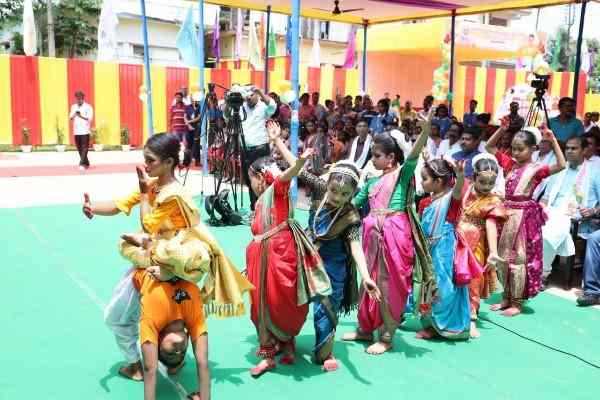
Chief Minister Prof. Dr Manik Saha inaugurated the initiative at PM-Shri A.D. Nagar English Medium School in Agartala on August 21. The School Education Department has introduced the project as a pilot programme.
The initiative will connect students in remote schools with teachers through live digital classes. The government plans to use the system for subjects such as Mathematics, Science and English.
The move aims to address one of the key challenges faced by students in remote areas. Many such schools have limited access to specialised teachers and advanced learning resources.
Two-Way Learning System
The virtual classroom model will go beyond one-way video lessons. Students will be able to communicate with teachers during live sessions.
They can ask questions and seek clarification while a class is in progress. This interactive format is designed to make remote learning more similar to a conventional classroom.
Teachers will conduct the sessions from a centrally established studio. Students will receive the lessons at their respective schools through the digital classroom network.
The government expects the programme to reach around 40,000 students. It also hopes the system will help students continue their studies without geographical barriers affecting their access to quality instruction.
Focus on Urban-Rural Education Gap
The virtual classroom initiative places technology at the centre of Tripura education reform.
Urban schools generally have greater access to specialised teachers and learning resources. Students in distant locations can face difficulties in accessing the same opportunities.
The new system seeks to narrow that gap. Instead of requiring students to travel long distances, the programme will bring experienced teaching resources directly into remote classrooms.
The initiative could also create a more uniform learning environment across different parts of the state. Students from remote schools will have an opportunity to learn key subjects through structured live sessions.
CM Stresses Focus and Self-Learning
Speaking to students at the programme, Dr. Saha also highlighted the importance of concentration and perseverance.
He said students need to remain focused on their goals and make consistent efforts to gain knowledge. He also urged them to pay close attention to classroom teaching and strengthen their learning through self-study.
The Chief Minister said knowledge remains essential for students who want to succeed in an increasingly competitive environment.
He further advised parents not to measure the success of their children only through examination marks. Instead, he encouraged families to focus on developing children into responsible and capable individuals.
Education Infrastructure Gets Attention
The virtual classroom project formed part of a wider programme focused on education infrastructure and development.
Dr Manik Saha laid foundation stones for infrastructure projects at Netaji Subhash Vidyaniketan, Baradowali XII Class School, Hapania XII Class School and Charipara XII Class School.
He said the state government is giving priority to education, healthcare and infrastructure development.
The government is also collecting information on basic facilities in schools. The assessment covers boundary walls, drinking water, seating arrangements, mid-day meals and toilets.
Officials will use the findings to identify gaps and take corrective measures.
Technology as a Tool for Equal Learning
The launch of virtual classrooms signals a wider shift towards technology-enabled education in Tripura.
The success of the pilot project will depend on reliable digital connectivity, regular classes and effective interaction between teachers and students. Continued monitoring will also be important to ensure that schools in difficult locations receive consistent support.
For thousands of students in remote areas, however, the initiative could open access to teaching resources that were previously harder to reach.
By bringing live instruction closer to rural classrooms, Tripura aims to make quality education less dependent on location.
Officials present at the launch included Urban Development Department Secretary Milind Ramteke, Education Department Director Dr. Samit Roy Chowdhury, Corporator Alok Roy, Agartala Municipal Corporation Mayor and MLA Dipak Majumdar, and MLA Meena Rani Sarkar.
