

Tripura needs to reduce its dependence on purchased electricity and strengthen the financial position of its state power utility, former Power Minister Manik Dey said.
Dey called for the revival of dormant generation capacity, reduction of distribution losses and stronger revenue collection to address the underlying problems in the power sector.
Key Takeaways:
- Former minister Manik Dey calls for a long-term plan to restore TSECL financial stability.
- He urges revival of Baramura, Rokhia and Dambur power projects to increase local generation.
- Dey says lower technical losses, better billing and recovery of dues can reduce tariff pressure.
Dey Calls for Structural Reform in Power Sector
Former Tripura Power Minister Manik Dey has called for a comprehensive restructuring of the state power sector instead of relying mainly on tariff revisions to address the financial problems of the Tripura State Electricity Corporation Limited (TSECL).
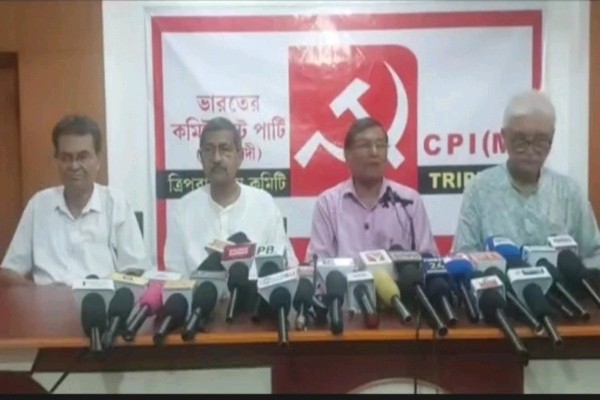
Speaking at a press conference, Dey said the immediate focus should be on improving the utility financial position and reducing the cost of power supply.
He said repeated tariff increases would continue to burden consumers unless the government addresses the structural weaknesses within the power sector.
Revival of Local Generation Capacity
Dey identified restoration of Tripura own power-generation capacity as a key solution.
He referred to the Baramura and Rokhia power plants and said their modernisation could significantly increase local generation. He also highlighted the Dambur hydroelectric project and called for its renovation.
According to Dey, additional generation from these projects could reduce the amount of electricity purchased from outside the state.
He argued that locally generated power could also help reduce the cost burden on TSECL.
Reducing Power Losses Seen as Key
The former minister also focused on technical and commercial losses in the distribution network.
He claimed the aggregate technical and commercial loss remains around 29 percent. Dey said the figure could be reduced through infrastructure upgrades and better management.
He called for the replacement of ageing transformers and damaged lines. He also sought improvements in metering, billing and power distribution.
Dey said investments already received from institutions such as the World Bank and Asian Development Bank should produce measurable improvements in the distribution system.
Revenue Collection Needs Greater Focus
Dey said TSECL could improve its financial position by recovering outstanding dues.
He referred to delayed payments from different categories of consumers and institutions. He argued that timely billing and stronger collection mechanisms could reduce the utility revenue gap.
The former minister also stressed the need to replace faulty meters and ensure regular meter readings.
He said consumers should not be made to bear the financial consequences of operational inefficiencies.
Questions Growing TSECL Revenue Gap
Dey claimed TSECL reported a revenue gap of more than ₹1,700 crore before the latest tariff-related decisions.
He questioned how the utility reached such a position after years of investment in system improvement.
Dey said the government should publicly explain the reasons behind the revenue gap and present a clear plan to bring TSECL towards a financially sustainable position.
He argued that tariff increases alone cannot resolve the problem.
Smart Meter Rollout Faces Questions
Dey also linked the future of the power sector to the ongoing smart-meter rollout.
However, instead of focusing only on the tariff impact, he questioned the accountability structure surrounding smart meters.
He said consumers need clarity on who will repair or replace meters if they malfunction. He also raised concerns about consumer data being handled by private agencies.
Dey said technology can improve the power system, but it should not weaken consumer protection or increase the financial burden on households.
Private Participation Raises Concerns
The former minister also questioned the growing role of private agencies in power distribution.
He alleged that private franchisees operating in some parts of the state had created financial and administrative complications.
Dey cited an alleged case involving a private company that collected around ₹150 crore from consumers before leaving the state. He demanded an investigation and accountability in the matter.
He argued that the government must ensure that private participation does not weaken the state power utility.
Long-Term Plan Needed for TSECL
Dey said the government needs a clearly defined roadmap for TSECL.
He suggested four major priorities: increasing local power generation, reducing technical and commercial losses, improving revenue collection and strengthening the distribution network.
He also urged the government to consult consumer organisations and power-sector employees before taking major decisions.
Dey said electricity remains an essential service and the state cannot avoid its responsibility for reliable and affordable power supply.
He argued that a stronger TSECL would ultimately offer the best protection against recurring tariff pressure and service disruptions.
