

From turning discarded fabric into useful products to expanding community-led development across Tripura, two separate workshops have highlighted practical approaches to sustainability and grassroots participation. The initiatives place students, local institutions and community organisations at the centre of efforts to build environmentally responsible and inclusive communities.
Key Takeaways
- Padmapur Higher Secondary School hosted a two-day workshop on recycling old clothes and waste paper.
- A state-level PRI-CBO workshop reviewed Phase I and outlined strategies for Phase II across 58 blocks.
- Both initiatives focus on practical skills, community participation, environmental awareness and sustainable development.
A two-day workshop on environmental conservation and waste management began at Padmapur Higher Secondary School on August 24. The programme focuses on recycling old clothes and waste paper while creating greater awareness among students about responsible waste management.
The initiative comes alongside a state-level review of the PRI-CBO Convergence Universalization Project. The two-day Exit-cum-Strategy Workshop for Phase I and Phase II also began on August 24.
Together, the initiatives highlight two important areas of development in Tripura. One focuses on environmental responsibility among school students. The other seeks to strengthen community participation in rural development.
Padmapur School Promotes Recycling
The workshop at Padmapur Higher Secondary School is being organised on August 24 and 25. The Youth and Eco Club has taken the initiative with support from the Environmental Education Programme and the Tripura State Pollution Control Board.
District Education Officer Fironjan Tripura attended the inaugural programme. The school principal, teachers and students were also present.
The workshop uses practical training to explain the value of recycling. Students will learn how to reuse old clothes and convert them into useful products.
They will also receive hands-on training in making paper bags from waste paper. The sessions aim to show students that discarded materials can have a second use.
The programme also highlights paper bags as an alternative to plastic. Students will learn how responsible consumption can help reduce the amount of waste generated in everyday life.
Focus on Practical Environmental Education
The school initiative goes beyond classroom-based environmental education. It allows students to develop practical skills while learning about waste management.
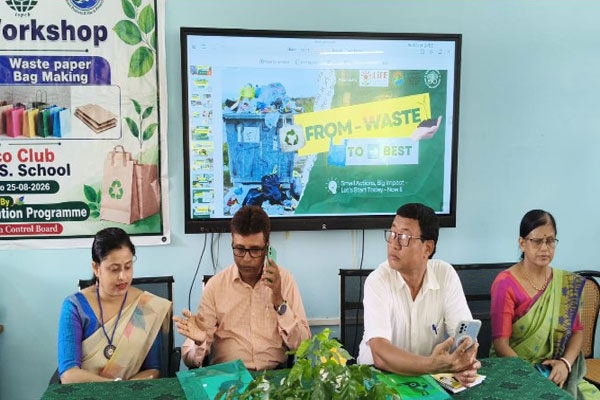
Reducing waste, reusing materials and recycling discarded products form the core themes of the workshop. The organisers also expect the activities to encourage creativity among students.
Such practical programmes can help young people understand environmental issues through direct experience. They can also encourage students to carry sustainable habits from school to their homes and communities.
The organisers and school authorities believe the initiative will contribute to greater environmental awareness among students. They also expect it to encourage more responsible approaches to waste disposal.
State-Level Workshop Reviews PRI-CBO Convergence
A separate two-day State-Level Exit-cum-Strategy Workshop on the PRI-CBO Convergence Universalization Project began on August 24.
The workshop covers Phase I and Phase II of the project. Phase I is formally concluding, while Phase II is set to expand the initiative across all 58 Blocks under eight districts of Tripura.
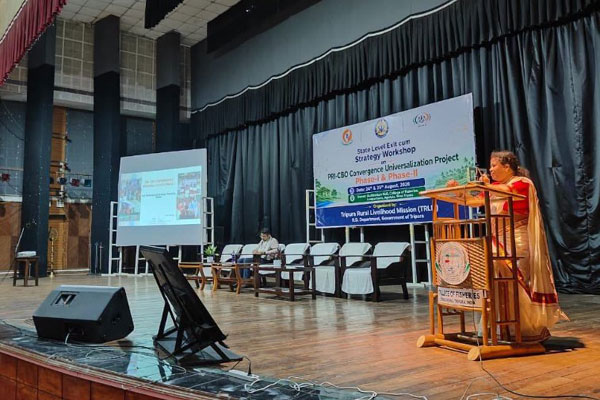
The workshop provides an opportunity to review the achievements and outcomes of Phase I. Participants are also discussing key lessons and grassroots experiences gathered during the implementation process.
The discussions focus on strengthening cooperation between Panchayati Raj Institutions (PRIs) and Community-Based Organisations (CBOs).
The project seeks to make this partnership more effective and sustainable. It also aims to strengthen community participation in rural development.
Grassroots Experience Guides Phase II
As part of the state-level workshop, District Resource Person Ratna Dey Saha shared her field-level experience.
Saha works in Karbook and Silachari RD Blocks of Gomati district. She discussed her experience with PRI-CBO convergence activities at the grassroots level.
Her observations underlined the importance of cooperation between local governance institutions and community organisations. Stronger coordination can help rural communities participate more actively in development planning and implementation.
The experience from the field also offers practical lessons for the next phase of the project.
Phase II to Expand Community-Led Development
With Phase II, the PRI-CBO initiative will move towards wider implementation across Tripura. The focus will remain on deeper collaboration between PRIs and CBOs.
The strategy also seeks to create stronger community-led mechanisms. These mechanisms are expected to support more inclusive and sustainable rural development.
The workshop therefore serves both as a review platform and a planning exercise. It connects lessons from Phase I with the objectives of Phase II.
Two Initiatives, One Broader Goal: Enewstime Desk Perspective
Although the two workshops focus on different areas, both place participation and practical action at the centre of development.
The Padmapur programme encourages students to reduce waste and reuse available materials. The PRI-CBO initiative seeks to involve rural communities more closely in development processes.
Both approaches emphasise local participation. They also underline the importance of building sustainable practices at the grassroots level.
For Tripura, these initiatives reflect a broader effort to connect awareness, skills, community participation and sustainable development. From schools to rural institutions, the emphasis remains on creating practical solutions that can produce longer-term social and environmental benefits.
