

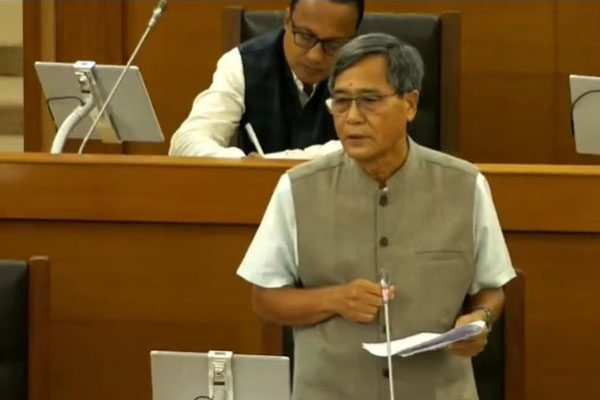
Hundreds of Tripura schools are facing serious staffing and infrastructure concerns, Opposition Leader Jitendra Chaudhury and Congress MLA Sudip Roy Barman told the Assembly on Thursday. Chief Minister Manik Saha responded by highlighting government initiatives on free and compulsory education and measures covering 125 schools.
Key Takeaways:
- Jitendra Chaudhury flagged a sharp decline in teacher numbers and highlighted shortages in schools across Tripura.
- Sudip Roy Barman cited schools with hundreds of students but very few teachers and questioned delays in recruitment.
- Chief Minister Manik Saha defended government efforts on free and compulsory education and pointed to initiatives covering 125 schools.
Teacher Crisis Sparks Sharp Debate in Assembly
A debate over the shortage of teachers in Tripura schools turned into a wider discussion on the quality of education, recruitment and school infrastructure on Thursday.
Opposition Leader Jitendra Chaudhury raised the issue during the Assembly session. Congress MLA Sudip Roy Barman also questioned the government over vacancies and delayed recruitment.
Chief Minister Manik Saha responded by highlighting government initiatives in the education sector. He also referred to free and compulsory education and programmes covering 125 schools.
Jitendra Chaudhury flags decline in teachers
Chaudhury said education remains central to the development of any society. He warned that the shortage of teachers could affect the future of the younger generation.
He cited figures presented in the Assembly to show a decline in teacher strength. According to the figures he quoted, elementary and secondary education had around 37,000 teachers on January 1, 2018.
The number stood at around 25,400 by January 2026. Chaudhury said this represented a decline of more than 12,000 teachers.
He also referred to UDISE+ data. Student enrolment declined from 5,71,868 in 2018-19 to 5,08,036 in 2023-24, according to the figures cited during the debate.
Tribal areas face major staffing concerns
Chaudhury said the situation was more worrying in areas under the Tripura Tribal Areas Autonomous District Council.
He claimed that 372 schools in the ADC area were functioning with a single teacher. He also said more than 400 schools in ADC and non-ADC areas were running with only two teachers.
He questioned how schools could provide quality education when teachers had to manage several classes and subjects.
Chaudhury also cited UDISE+ dropout figures. He said the dropout rate stood at 1.8 per cent for Classes III to V, 8.1 per cent for Classes VI to X, 8.9 per cent for Classes IX and X, and 12.1 per cent for Classes XI and XII in 2023-24.
Recruitment delays come under fire
The Opposition Leader questioned the delay in filling teacher vacancies.
He referred to candidates who cleared TET and other recruitment examinations but continued to wait for appointments.
Chaudhury said thousands of qualified youths remained unemployed while schools faced teacher shortages. He urged the government to use available vacancies to strengthen the education system.
He also called for greater attention to schools in rural and tribal areas. He said quality teachers and other essential facilities must reach these institutions.
School infrastructure also a concern
The debate went beyond teacher vacancies.
Chaudhury cited UDISE+ figures on basic facilities in schools. He said 24 per cent of schools had no electricity, while 40 per cent lacked water facilities.
He further claimed that 27 per cent of schools had no girls toilets and 38 per cent lacked boys toilets.
According to the figures he cited, 48 per cent of schools had no computers and 60 per cent lacked internet facilities.
Chaudhury said education requires more than teachers. He stressed the need for classrooms, textbooks, playgrounds, toilets, computers, internet connectivity and libraries.
Sudip Roy Barman cites schools with severe shortages
Roy Barman backed the concerns over teacher shortages and cited examples from different schools.
He referred to a school in Kumarghat with around 400 students and only four teachers.
He also cited another school with around 400 students where, according to his statement, only the headmaster was present.
Roy Barman questioned the recruitment process for different levels of school education.
He referred to TET-I for Classes I to V, TET-II for Classes VI to VIII and STGT for Classes IX and X. He questioned why STGT recruitment had not taken place after 2019.
He also referred to candidates who had cleared recruitment examinations but were still waiting for appointments.
CM Dr Saha highlights education initiatives
Chief Minister Dr Manik Saha responded to the concerns raised during the debate.
He referred to the governments commitment to free and compulsory education. He said education initiatives were being implemented across schools and referred to 125 schools under the programme.
The Chief Minister also stressed that recruitment challenges affect several departments. The discussion referred to staffing requirements in education, health, public works and other sectors.
Saha maintained that the government was taking steps in the education sector. His response also highlighted ongoing government programmes rather than accepting the opposition charge that the sector was being ignored.
Opposition seeks urgent action
Chaudhury urged the government to take the teacher shortage seriously.
He said the issue could have a long-term impact on Tripura. He called for collective measures to strengthen human resources through better education.
Roy Barman also appealed for political cooperation on the issue. He said the future of students should remain the priority.
The Assembly discussion placed teacher recruitment, student enrolment and school infrastructure at the centre of the education debate.
The exchange also highlighted the gap between staffing requirements and the availability of teachers in several schools.
Both opposition leaders called for faster action. The government, meanwhile, pointed to existing education programmes and efforts to expand facilities.
The debate underlined the need to address teacher vacancies while improving basic infrastructure across Tripura schools.
