

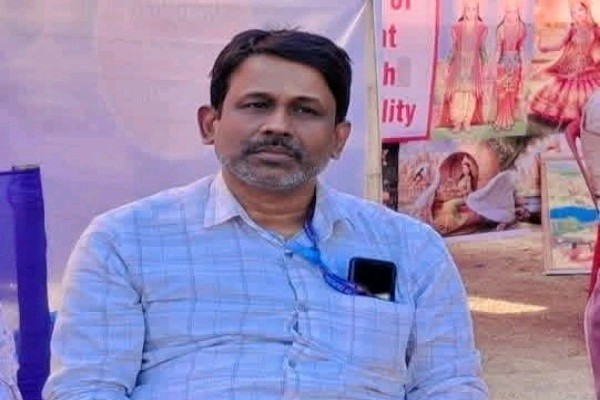
The greatest achievement of a teacher may not be a medal or a national honour – for Ranjan Debnath, it is seeing former students return as confident and responsible adults. That belief has shaped nearly three decades of his career and now stands at the centre as he is all set to receive the National Teachers’ Award 2026.
Key Takeaways:
- Ranjan Debnath, headmaster of PM SHRI Sabroom Girls Higher Secondary School, is among 48 teachers selected for the National Teachers’ Award 2026.
- His education model combines technology, project-based learning and inclusive classrooms with character building and community participation.
- His national recognition highlights the potential of rural and border-area schools to deliver innovative, student-centred education.
Ranjan Debnath’s journey reflects a simple belief. Education should create good human beings before it creates successful professionals.
| Read more Feature stories here |
The headmaster of PM SHRI Sabroom Girls Higher Secondary School is among 48 teachers selected from across India for the prestigious National Teachers’ Award 2026. He will receive the honour from the President of India on September 5.
His selection has also brought national attention to Sabroom, a border town in southern Tripura.
Technology With a Human Purpose
Debnath has witnessed major changes in education during his career. Classrooms have moved from chalkboards and one-way lectures to smart learning, digital tools and artificial intelligence.
However, he does not see technology as a replacement for teachers.
Instead, he believes technology should improve interaction, encourage curiosity and make learning more meaningful.
At PM SHRI Sabroom Girls Higher Secondary School, his leadership has helped expand the use of smart classrooms, ICT laboratories, Atal Tinkering Labs, science projects and skill education.
Students increasingly learn through activities, experimentation and collaboration. The approach moves beyond rote memorisation and encourages practical problem-solving.
Breaking the Frontbench-Backbench Divide
One of Debnath’s notable innovations is the introduction of U-shaped classroom seating.
The arrangement removes the traditional distinction between frontbenchers and backbenchers. It also allows teachers to maintain direct contact with every student.
The model encourages participation and gives quieter students greater opportunities to engage in classroom discussions.
His wider teaching philosophy follows the principle of “Learning by Doing”. Project-based learning, educational videos and activity-oriented lessons help students explore ideas instead of simply memorising information.
Building Character Beyond the Classroom
For Debnath, education does not end with academic performance.
He places equal importance on sports, yoga, cultural activities, science programmes, health awareness and leadership development.
The school has strengthened Bal Sansad, a student leadership initiative that allows learners to participate in school activities and develop responsibility and confidence.
He also considers parents and communities important partners in education. Regular parent meetings, awareness programmes and community discussions help address challenges faced by students in economically disadvantaged and remote areas.
Turning a Border School Into a Model Institution
PM SHRI Sabroom Girls Higher Secondary School has around 700 students and a relatively small teaching workforce.
Despite the constraints, the school has expanded opportunities in technology, sports, life skills and co-curricular education.
Infrastructure improvements have also supported its development. Hostel facilities, water conservation initiatives and student-centred learning spaces have strengthened the institution under the PM SHRI programme.
Debnath’s reputation, however, predates his Sabroom posting.
During his tenure at Henry Derozio School, his student-focused reforms earned strong support from students and parents. His transfer reportedly triggered emotional protests as students and parents sought to retain him.
A farewell message from that period later gained wider attention. He urged students to pursue success without sacrificing humanity and reminded them that knowledge should ultimately serve society.
His Contribution Extends Beyond One School
Debnath has also contributed to education across Tripura.
He has conducted teacher-training programmes and mentored newly appointed headmasters. He has participated in SCERT initiatives and regularly taught through Vande Tripura, helping extend educational content to students across the state.
These efforts reflect his belief that educational leadership must extend beyond administrative duties.
National Honour, Collective Achievement
Despite his selection for the National Teachers’ Award, Debnath views the recognition as a collective achievement.
He credits his students, colleagues, school community and the people of Tripura for the honour.
For him, the most meaningful reward remains the success of his former students and the values they carry into adulthood.
He now wants to develop PM SHRI Sabroom Girls Higher Secondary School into a nationally recognised model institution. He also hopes to expand educational opportunities for children in remote areas of Sabroom and Satchand.
His journey offers a powerful reminder in an increasingly technology-driven education system: digital tools can transform classrooms, but committed teachers transform lives.