

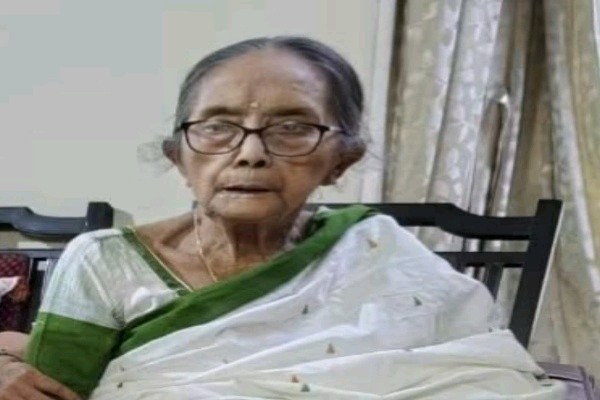
Biva Sengupta, an Agartala-born Rabindra Sangeet exponent who built her musical identity in Kolkata and later trained generations of singers, died at a Kolkata hospital on October 6 at the age of 94.
Key Takeaways
*Agartala-born Biva Sengupta died in Kolkata on October 6, 2026, at the age of 94.
*She trained under Maya Sen and came under the influence of renowned singer Debabrata Biswas.
*Her biggest legacy lies in the generations of Rabindra Sangeet students she trained.
Biva Sengupta’s death marks the end of a long musical journey that connected Agartala with Kolkata and performance with teaching. Born in Agartala on May 12, 1932, she devoted much of her life to Rabindra Sangeet.
She performed on stage, preserved her voice through recordings and, most importantly, taught the tradition to generations of students. Her musical journey therefore extended beyond her own performances.
Sengupta’s contribution also reflected a deep understanding of Rabindranath Tagore’s songs. She gave importance to melody, lyrics, pronunciation and emotion. Through her teaching, she sought to help students understand and feel the songs rather than simply reproduce their tunes.
Music began in Agartala
Sengupta grew up in the cultural environment of Agartala. Her formal musical journey began after her mother brought home a small harmonium.
In a 2024 interview, Sengupta recalled that she had never told her mother that she wanted to learn music. One day, after returning from school, she found the harmonium at home and was surprised.
Her mother arranged for her initial training under Snehamshu Chowdhury at their home.
Sengupta also developed a strong interest in Nazrul Geeti. She recalled singing many such songs during her early years. Later, she learnt from Krishnajeet Debbarman when her earlier teacher became ill.
By then, classical music training had already helped develop her voice.
Journey to Kolkata
Sengupta travelled to Kolkata for the first time on July 3, 1958. The move became an important turning point in her musical life.
In Kolkata, she trained in Rabindra Sangeet under Maya Sen. Through Sen, she came into contact with Debabrata Biswas, one of the distinguished voices associated with Rabindra Sangeet.
Biswas influenced Sengupta’s musical thinking and singing style. However, she did not simply imitate him. Years of practice helped her develop an individual approach.
She placed particular emphasis on the meaning and emotion contained in Tagore’s lyrics. That approach became an important part of her own singing.
Teacher before celebrity
Teaching became one of the most important aspects of Sengupta’s musical life.
She trained numerous students in Rabindra Sangeet. Her lessons covered more than melody and rhythm. She focused on lyrics, pronunciation and emotional expression.
She also encouraged students to understand the meaning of Tagore’s compositions and experience the emotions within them.
Her long career did not place her constantly at the centre of public attention. Yet her influence travelled through the students she trained.
That teacher-student relationship became a major part of her musical legacy.
Her voice lives through recordings
Sengupta’s voice remains preserved in recordings. Her songs feature in the album Jhar Jhar Barishe.
She also participated in important Bengali cultural programmes, including the Bengali Music Fair.
However, her contribution cannot be measured only through recordings and stage appearances. Much of her work lives in the singers who learnt Rabindra Sangeet from her.
For Sengupta, music represented both performance and responsibility. She viewed the tradition as something that needed to reach the next generation.
Music remained central until her final days
Sengupta maintained her connection with the cultural world even in her later years.
On September 29, just days before her death, representatives of Lokbharati visited her home and honoured her. The gesture reflected her continued association with the cultural community.
Sengupta died on October 6, 2026, while undergoing treatment at a hospital in Kolkata. She was 94.
Her death brings to a close a long chapter in the world of Rabindra Sangeet. Yet the tradition she carried forward continues through the students she trained.
A harmonium that carried a special memory
Sengupta received several honours during her lifetime. Among her most treasured possessions, however, was a harmonium gifted to her by Debabrata Biswas.
The instrument held special emotional value for her. It represented not only her association with a major figure in Rabindra Sangeet but also the bond between a teacher and a student.
Sengupta’s musical identity grew from Agartala, developed through her journey in Kolkata and matured through years of practice and teaching.
Her legacy therefore extends beyond the songs she recorded or the stages where she performed. It lives in the voices of the singers she trained.
From Agartala to Kolkata, her journey became a bridge between generations — from student to artist, from artist to teacher, and from teacher to a new generation of Rabindra Sangeet singers.