

Outraged by unrelenting ethnic violence that has claimed more than 350 lives over three years, the Uddhav Thackeray-led Shiv Sena (UBT) faction used its mouthpiece Saamana on October 12 to sharply condemn the Central government for deploying massive force to safeguard political power in New Delhi while abandoning the frontier state of Manipur to ongoing carnage.
Key Takeaways:
-
Shiv Sena (UBT) mouthpiece Saamana condemned the Centre for fortifying New Delhi to suppress political protests while ethnic violence escalates in Manipur.
-
Ongoing ethnic conflicts among the Meitei, Kuki, and Naga communities have resulted in over 350 deaths over three years, with 60 fatalities recorded in the last six months alone.
-
The party accused top leadership of enforcing a narrow policy that protects political power in Delhi while abandoning grassroots peace efforts in Manipur.
The political atmosphere intensified following a stern rebuke issued against the Central administration. The Shiv Sena faction led by Uddhav Balasaheb Thackeray launched an unsparing critique through its mouthpiece, Saamana. The editorial targeted the ruling Bharatiya Janata Party (BJP) over glaringly misplaced administrative priorities. It drew attention to a troubling dichotomy in how state power is applied across the country.
According to the commentary, government authorities deployed vast state machinery to convert the national capital into an armed cantonment. This heavy deployment aimed strictly at suppressing peaceful political demonstrations. Meanwhile, the border state of Manipur remained severely neglected, enduring continuous ethnic strife.
Unabated Conflict on the Ground
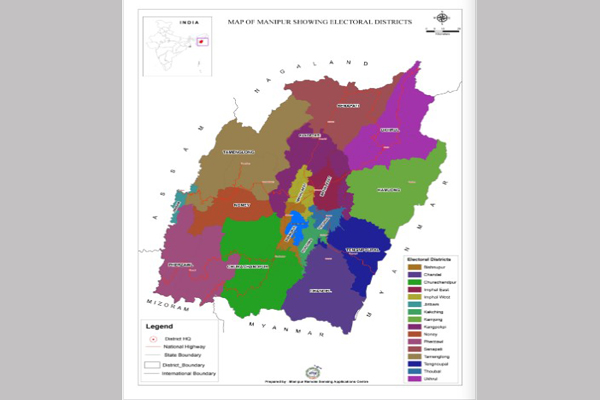
The publication painted a tragic portrait of ground conditions across the northeastern state. Despite the presence of a double-engine government operating at both central and state levels, lasting peace remains completely out of reach. Deep-seated friction involving the Meitei, Kuki, and Naga populations originally erupted over legal disputes regarding Scheduled Tribe status.
Over the past three years, this ongoing turmoil has taken more than 350 lives. Furthermore, the region has suffered a severe and deadly resurgence of violence. Statistics highlighted in the commentary revealed that 60 individuals lost their lives within the last six months alone. At least 23 fatal attacks occurred during a tight 20-day timeframe.
Escalating Human Cost and Public Anger
The brutal reality of the crisis unfolded during a recent incident in the Sunulok region. Armed assailants opened indiscriminate fire on 14 Meitei civilians collecting firewood in a nearby forest. Three individuals died instantly at the scene.
Angered by the tragic loss, local residents placed the corpse of a slain youth directly outside the Imphal residence of Chief Minister Yumnam Khemchand Singh. This direct action served as a vocal protest against the administration’s inability to protect civilian lives. Meanwhile, thousands of displaced residents languish in overcrowded, substandard government relief camps, enduring continuous fear while armed groups clash freely with military-grade weapons.
Heavy Security and Policy Failures
The Thackeray camp asserted that security forces are deployed in large numbers, yet essential grassroots trust-building measures are completely missing. Authorities treat the mere dispatch of armed contingents as the final step of their duty.
To crush opposition rallies in New Delhi, the government mobilized sweeping security apparatuses. They transformed public thoroughfares into heavily fortified zones using barricades and force to maintain political dominance. In contrast, across the rugged hills and forests of Manipur, security measures failed to stop daily acts of arson, murder, and terror.
A Scathing Editorial Verdict
The publication emphasized that Prime Minister Narendra Modi’s visit to Manipur produced no lasting operational transformation. Instead, the piece accused the ruling leadership of acting under a narrow and self-serving directive. The governing policy appears to suggest that Manipur can continue to burn as long as political control in Delhi remains secure.
The editorial concluded with a poignant question directed at the ruling establishment. The party asked whether Manipur is not an integral part of India just like Delhi. It demanded to know why overwhelming force is reserved for the national capital while Manipur continues to burn in an endless inferno. (Edited by Enewstime Desk)