

Brazilian President Luiz Inacio Lula da Silva defeated Liberal Party candidate Flavio Bolsonaro in Sunday’s presidential runoff on October 25, 2026, securing another four-year term after a political comeback shaped by his trade union roots, social welfare policies and return to electoral politics following the annulment of his corruption convictions.
Key Takeaways
-
Luiz Inacio Lula da Silva defeated Liberal Party candidate Flavio Bolsonaro in Sunday’s presidential runoff to secure a fourth term.
-
Lula rose from a poor rural background to become Brazil’s first working-class president in 2002. His social welfare programme helped millions escape poverty.
-
Lula supports stronger social policies, workers’ rights, BRICS cooperation and closer relations between Brazil and China.
The victory of Lula marks another major milestone in his political career, which began with his rise as a trade union leader and later saw him become Brazil’s first president from a working-class background.
| Read Selected International News HERE |
Lula Defeats Bolsonaro in Presidential Runoff
Lula staged a political comeback by defeating Flavio Bolsonaro in the presidential runoff. Bolsonaro had led in the first round, but Lula secured victory in the decisive contest on Sunday.
The result will allow Lula to continue leading Brazil for another four years. He is scheduled to begin his fourth presidential term on January 5, 2027.
Lula’s political journey spans several decades. His rise from a poor rural family to the country’s highest office has shaped his public image and political agenda. His emphasis on social welfare, workers’ rights and government intervention remains central to his political outlook.
From Poor Rural Family to Trade Union Leader
Born in October 1945 in northeastern Brazil, Lula was the seventh child in a poor rural family.
He began emerging as a prominent trade union leader in the early 1970s. During this period, he became a leading voice for poor communities and workers. He also played a significant role in the struggle against Brazil’s military regime.
In 1980, Lula co-founded the Workers’ Party (PT), establishing a political platform that would later propel him to the presidency.
His trade union background helped shape his commitment to labour rights and social protection. These priorities continued to feature prominently in his political career.
First Presidency and Bolsa Familia Programme
Lula achieved a landslide victory in Brazil’s 2002 presidential election. The victory made him the country’s first president from a working-class background.
He won re-election in 2006, beginning a second consecutive term in office. During his presidency, the government implemented Bolsa Familia, a flagship cash transfer programme designed to support low-income families.
The scheme helped millions of Brazilians escape poverty. It also became a defining feature of Lula’s social welfare agenda.
His focus on poverty reduction and social support strengthened his political identity. These policies remain an important part of his approach to governance.
Operation Car Wash and Legal Setback
Lula’s political career later faced a major setback when Brazilian judicial authorities launched Operation Car Wash in 2014. The investigation targeted corruption and developed into a sweeping probe.
Authorities investigated Lula, and he was subsequently convicted and imprisoned in connection with corruption charges.
However, Brazil’s Supreme Federal Court overturned all his convictions related to the charges in March 2021. The ruling cleared the way for his return to electoral politics.
The legal developments marked a turning point in Lula’s political journey. He subsequently re-entered the presidential race in 2022.
2022 Victory Paved the Way for Comeback
Lula defeated then-President Jair Bolsonaro in the 2022 presidential election, returning to Brazil’s highest office.
That victory made him the first Brazilian president to win three terms through direct popular elections, according to the Xinhua news agency report.
His latest victory over Flavio Bolsonaro further extends his political career. It also brings him back to the presidency for a fourth term, following decades of political activity, electoral success and legal challenges.
Social Policies and Workers’ Rights Remain Priorities
Lula advocates a greater role for the government in public policy and economic affairs. He also supports stronger social welfare measures and better protection for workers’ rights.
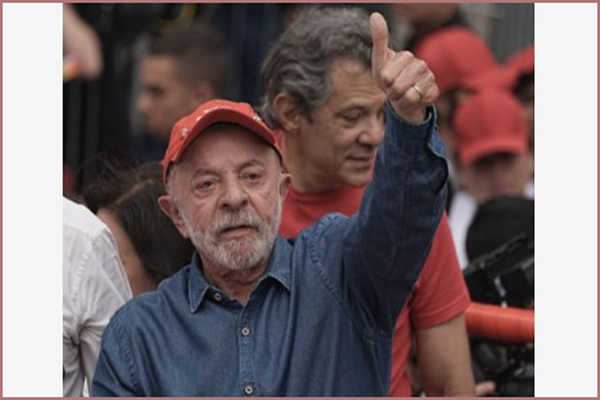
His political approach places emphasis on reducing poverty and strengthening social support systems. The Bolsa Familia programme reflects this broader commitment.
These priorities have remained consistent throughout his political career, from his early days in the trade union movement to his return to the presidency.
China Relations and BRICS Cooperation
Lula also favours an active role for Brazil in international affairs. His foreign policy agenda places importance on BRICS cooperation and stronger partnerships among developing countries through South-South cooperation.
Relations with China form another key element of his diplomatic priorities. Lula has actively promoted the development of a China-Brazil community with a shared future.
The initiative aims to contribute to a fairer world and a more sustainable planet. His approach reflects an emphasis on international cooperation and closer engagement with major global partners.
With his latest electoral victory, Lula is set to begin another four-year term on January 5, 2027. His fourth term will extend a political journey that began with trade union activism and evolved into one of Brazil’s most prominent presidential careers. (Edited by Enewstime Desk)