

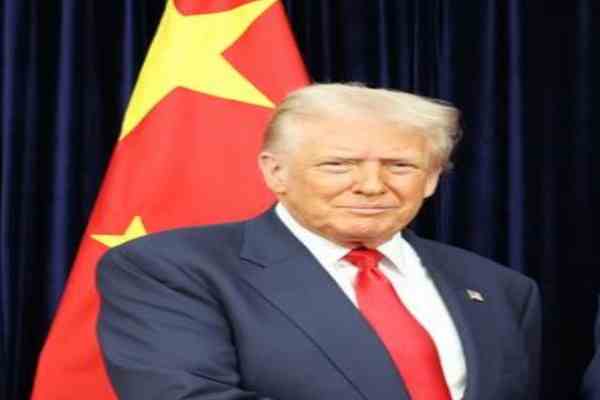
At the APEC leaders’ plenary in Shenzhen on November 19, Chinese President Xi Jinping called on Asia-Pacific economies to expand artificial intelligence (AI) adoption and cross-border digital cooperation, while US President Donald Trump opposed stringent regulations that could restrict the technology’s development.
At A Glance
- Xi Jinping urges APEC economies to expand AI adoption and strengthen regional cooperation on digital infrastructure.
- China announces $20 million to support APEC initiatives covering digital technology, clean energy and cross-border data flows.
- Donald Trump rejects stringent AI regulations, arguing that restrictions could hinder technological development.
China has called for greater regional cooperation on artificial intelligence (AI) and digital infrastructure at the Asia-Pacific Economic Cooperation (APEC) summit, highlighting the technology’s role in economic growth. The appeal came as US President Donald Trump opposed stringent AI regulations and warned against measures that could restrict technological progress.
Xi Jinping Calls for Greater AI Integration
Addressing the APEC leaders’ plenary in Shenzhen, Chinese President Xi Jinping described artificial intelligence and the digital economy as major drivers of innovation-led growth.
Xi urged member economies to strengthen cross-border data flows and accelerate the adoption of AI across industries. He also stressed the importance of regional cooperation in digital infrastructure and data governance.
China’s approach places greater emphasis on integrating emerging technologies into industrial development and strengthening cooperation among Asia-Pacific economies.
China Announces $20 Million for APEC Cooperation
Xi also announced a $20 million contribution to support cooperation among APEC members.
The funding will help establish institutions working in several key areas, including digital technology, cross-border data flows, clean energy and small-business development.
The initiative reflects China’s emphasis on strengthening regional economic cooperation through digital development and emerging technologies.
Trump Opposes Stringent AI Regulations
Meanwhile, Trump defended a less restrictive approach to artificial intelligence during the same APEC plenary.
Describing AI as “super intelligence”, the US President acknowledged that the technology carried certain risks but maintained that governments should manage those concerns without imposing stringent controls.
He said AI was almost entirely beneficial but required careful handling because of its potentially harmful elements.
Trump also declared that Washington would oppose robust regulatory measures or restrictions that could control and stifle the technology’s development.
His remarks reinforced his opposition to restrictive AI policies. However, the statements circulated by the White House press pool did not identify any new executive action, legislative proposal or specific regulation that the administration planned to withdraw.
AI Features in APEC’s Economic Discussions
Artificial intelligence also featured in the broader economic discussions at the summit.
The managing director of the International Monetary Fund (IMF) presented an economic overview during the plenary session, which included an assessment of AI’s impact.
However, voluntary and consensus-based framework discussed in the APEC means that individual leaders’ statements do not automatically become collective commitments by member economies.
The discussions highlighted the importance of artificial intelligence in the region’s economic agenda, alongside questions of technological development, digital cooperation and regulatory approaches. (Edited by Enewstime Desk)