

India used its BRICS chairmanship to push practical cooperation in areas ranging from disease surveillance and disaster preparedness to startups, supply chains and digital agriculture, Prime Minister Narendra Modi said at the close of the 18th BRICS Summit in New Delhi today on Sunday.
Key Takeaways
- PM Modi said India’s BRICS presidency focused on resilience, innovation, cooperation and sustainability.
- BRICS agreed on an integrated early warning system for infectious diseases and new disaster management guidelines.
- India proposed startup and digital agriculture initiatives to expand innovation and participation across BRICS.
BRICS presidency under India advanced a series of initiatives covering infectious disease preparedness, disaster management, supply chains, startups and digital agriculture, Prime Minister Narendra Modi said today as he outlined the outcomes of the 18th BRICS Summit.
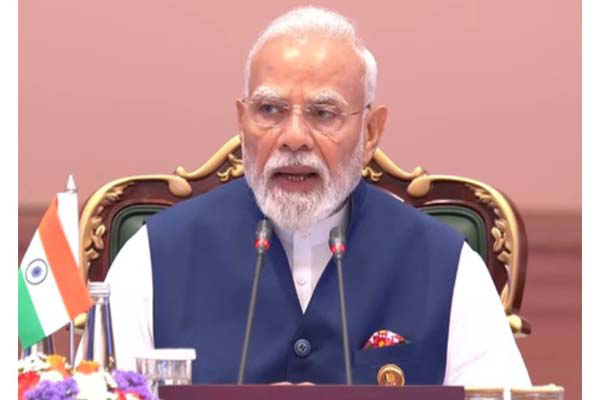
Addressing the summit’s closing session at Bharat Mandapam in New Delhi, Modi said India had focused its BRICS agenda on resilience, innovation, cooperation and sustainability.
He said the grouping had worked to turn the shared vision of its member countries into “win-win collaboration” with the support of all participating states.
BRICS focuses on preparedness against global crises
Modi said growing global tensions are increasingly affecting ordinary people.
He cited pandemics, climate-related disasters and supply chain disruptions as examples of challenges that have exposed the vulnerabilities of an interconnected world.
According to the Prime Minister, a crisis in one region can no longer remain confined to that region.
He said India therefore placed special emphasis on strengthening resilience within BRICS.
Modi stressed the need to identify emerging challenges quickly and maintain adequate preparedness. He also called for timely action when crises emerge.
As part of this approach, BRICS members reached a consensus on an integrated early warning mechanism for infectious diseases.
“A consensus has been reached on a BRICS Integrated Early Warning System for the prevention of and response to infectious diseases. Additionally, Early Warning Data Integration Guidelines have been formulated for disaster management,” Modi said.
The measures are aimed at improving preparedness and strengthening the ability of member countries to respond to emerging health and disaster-related risks.
New framework targets supply chain resilience
The Prime Minister also highlighted the BRICS Logistics Supply Chain Cooperation Framework.
He said the framework would help make supply chains “more reliable and resilient”.
Supply chain disruptions have emerged as a major challenge in an increasingly interconnected global economy, Modi noted while explaining the importance of stronger resilience within BRICS.
The initiative forms part of India’s wider effort to strengthen practical cooperation among member states.
India pushes startup collaboration
Innovation was another major focus of India’s BRICS presidency.
Modi said the BRICS Incubator Network would connect startups and incubators from member countries.
The network is expected to create greater opportunities for cooperation among entrepreneurs and innovation ecosystems across BRICS.
India has also proposed the BRICS Startup Innovation Fund, Modi said.
The proposed initiative aims to promote innovative and scalable solutions and strengthen cooperation in the startup sector.
The Prime Minister’s emphasis on startups also reflects India’s effort to broaden BRICS engagement beyond conventional government-level cooperation.
Digital agriculture gets greater attention
Modi also highlighted the BRICS Network on Digital Agriculture.
He said the initiative would create new opportunities for farmers by connecting emerging technologies with their practical requirements.
He said the initiative would align artificial intelligence, geospatial technology, and digital public infrastructure with farmers’ actual needs.
The Prime Minister also warned against the use of technology and critical minerals as instruments that could undermine shared economic progress.
“The weaponisation of technology and critical minerals can create hurdles for common growth. Therefore, we have emphasised inclusivity in the adoption of technology,” he said.
BRICS seeks wider public participation
Modi said India had sought to strengthen the spirit of friendship, partnership and cooperation within BRICS during its presidency.
He stressed that cooperation should not remain restricted to governments.
India wants entrepreneurs, farmers, researchers, women, youth and ordinary citizens to become active participants in BRICS engagement, he said.
“We have made efforts to ensure that BRICS cooperation is not limited to governments alone. We want our entrepreneurs, farmers, researchers, women, youth, and ordinary citizens to become active participants as well,” the Prime Minister said.
The closing remarks highlighted India’s effort to give the BRICS agenda a practical focus, with initiatives spanning crisis preparedness, supply chains, innovation and agriculture while seeking broader participation in the grouping. (Edited by Enewstime Desk)
