

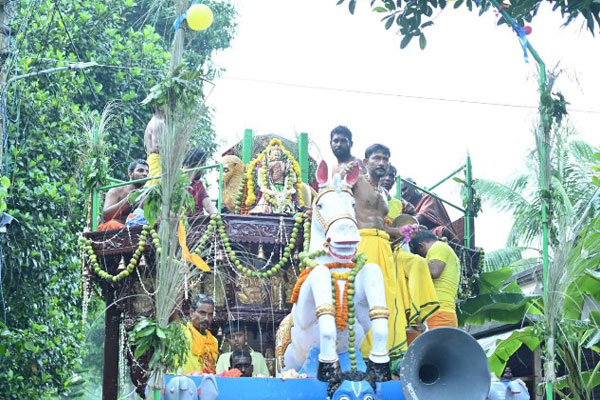
Melaghar in Tripura is preparing for the three-day Sri Sri Veeramma Kali Maa Puja and religious fair beginning July 29, 2026. Founded by Tamil Nadu spiritual leader Shri Thirumeni Veeramani, the temple represents a unique cultural connection between South Indian traditions and Northeast India’s spiritual heritage.
Quick Glance: Key Facts
- Sri Sri Veeramma Kali Maa Puja will begin on July 29, 2026, in Melaghar, Tripura.
- The temple was established in 2015 by Shri Thirumeni Veeramani.
- The shrine features a 45-foot South Indian-style Gopuram and an 18-armed Maa Veeramma Kali idol.
- The festival will include yajnas, Rath Yatra, spiritual rituals, and Maha Annaprasad distribution.
Agartala/Sonamura/Gandachhera (Tripura): Melaghar’s Sri Sri Veeramma Kali Maa Mandir has emerged as one of Tripura’s distinctive spiritual landmarks by bringing together traditions from Tamil Nadu and the Northeast.
According to our on-the-ground report in Melaghar, preparations are progressing for the annual three-day religious celebration scheduled from July 29 to July 31, 2026. The festival is expected to attract devotees who connect with the temple’s unique blend of cultural traditions.
The temple’s foundation story adds another layer to its identity. Shri Thirumeni Veeramani, a spiritual leader from Tamil Nadu, established the shrine in 2015 after arriving in Tripura for an engineering and seismic retrofitting project connected with Neermahal.
Temple authorities state that the foundation carries sacred soil brought from an ancient Kali temple in Sivaganga, Tamil Nadu. This tradition represents a symbolic spiritual link between southern India and Tripura.
Furthermore, the temple has developed a separate identity because of its Dravidian architectural style, which is uncommon in the Northeast region.
Veeramma Kali Temple: A Cultural Bridge Between Tamil Nadu and Northeast India
The Sri Sri Veeramma Kali Maa Mandir reflects the movement of religious traditions across India. While Tripura has long been known for historic Shakti centres such as the Tripura Sundari Temple, Melaghar’s Veeramma Kali shrine introduces a different devotional expression.
The temple’s 45-foot Gopuram stands as a visible symbol of South Indian architectural influence. The structure features multiple layers and sculptures representing Hindu deities.
Inside the sanctum, devotees worship the rare 18-armed Ashtadasa Bhuja form of Maa Veeramma Kali. The deity is regarded as a combined spiritual representation of Durga, Lakshmi, Saraswati, and Kali.
Speaking exclusively to Enewstime Desk, officials confirmed that the upcoming festival will maintain traditional rituals based on South Indian Agamic practices. These include Abhishekam, special prayers, yajnas, and community-based religious activities.
However, the temple’s popularity has grown beyond a regional boundary. It now reflects a wider story of cultural exchange within India.
3-Day Festival to Highlight Ritual Heritage & Community Participation
The 2026 festival will begin on July 29 with Ganapati Puja and Abhishek Alankaram at 6:00 AM. Guru Archana will follow at 10:00 AM.
The public fair inauguration is scheduled for 2:00 PM. Later, devotees will participate in a floral procession from Jagannath Bari, followed by Sumangali Puja in the evening.
On the second day, the Varahi Yajna will begin at 7:00 AM. The major attraction will be the Maa Veeramma Kali Rath Yatra at 11:00 AM. Organisers said the procession is dedicated to prayers for global peace and welfare.
Furthermore, the evening programme will include Kumkum Abhishek, Gita recitations, and Chandi Path.
The final day will feature Maha Chandi Yajna, Kumari Puja, and Matri Puja. The Maha Annaprasad distribution will begin from noon for devotees.
| Festival Day | Major Programme | Timing |
|---|---|---|
| July 29 | Ganapati Puja, Fair Inauguration, Sumangali Puja | From 6:00 AM |
| July 30 | Varahi Yajna, Rath Yatra, Spiritual Programmes | From 7:00 AM |
| July 31 | Maha Chandi Yajna, Annaprasad Distribution | From 12:00 PM |
Melaghar’s Growing Religious Tourism Potential
The Veeramma Kali temple has gradually become a destination representing India’s diverse spiritual traditions.
According to an internal document reviewed by Enewstime highlights, the temple’s unique combination of architecture, rituals, and cultural history has helped create interest among visitors seeking different religious experiences.
Specifically, the shrine offers a rare example of South Indian worship practices established within a Northeast Indian setting.
The annual festival also encourages community involvement. Devotees contribute through participation, offerings, and volunteer activities.
In addition, organisers have appealed for donations to support the celebration and invited devotees from different regions to join the event with their families.
The Spiritual Legacy Behind Veeramma Kali Worship
Veeramma Kali worship has deep roots in Tamil Nadu, especially in regions such as Sivaganga. Traditionally, the deity is respected as a protective village goddess, often associated with safeguarding communities and removing obstacles.
Unlike some classical temple traditions, village deity worship in Tamil Nadu often carries strong local participation and community connections.
The Melaghar temple preserves this heritage while adapting it within Tripura’s cultural environment.
Consequently, the shrine represents more than a place of worship. It reflects how religious traditions travel, transform, and create new identities across regions.
News Analysis: Veteran Journalist Perspective
The rise of Sri Sri Veeramma Kali Maa Mandir in Melaghar reflects a broader cultural trend in India where religious institutions are becoming centres of identity, tourism, and community interaction, opined a Sonamura-based senior journalist.
From an administrative viewpoint, the temple’s growth highlights Tripura’s evolving religious tourism landscape. The shrine’s unique Tamil-Northeast connection gives it a distinctive position among the state’s cultural attractions.
Furthermore, the annual festival demonstrates how spiritual events can strengthen social participation while preserving traditional practices.