

Tripura has reported a wide gap between targets and actual achievements under its flagship Swavalamban scheme, raising questions over the pace of MSME and self-employment generation in the state. The scheme established only 1,241 units against a target of 4,000 in FY 2025–26. The performance has remained slow in the current financial year, with just 33 units established so far.
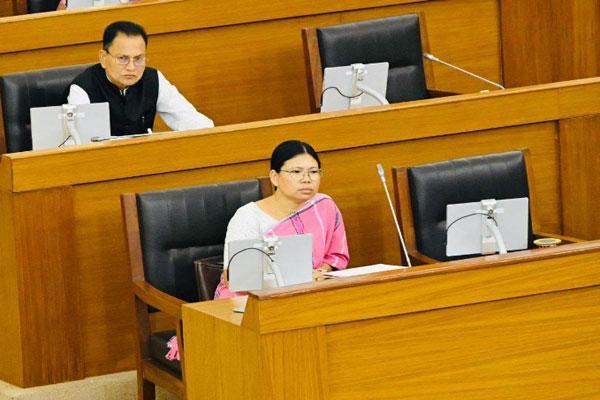
Industries and Commerce Minister Santana Chakma disclosed details in a reply to a question raised by MLA Sailendra Chandra Nath in the Tripura Legislative Assembly on August 27, 2026.
Key Takeaways:
- Swavalamban achieved only 1,241 of its 4,000-unit target in FY 2025–26.
- Just 33 units were established against another 4,000-unit target in FY 2026–27 so far.
- PMEGP achieved 573 units against 679, while PMFME exceeded its FY26 physical target.
Swavalamban: FY26 Starts Slowly
The Swavalamban scheme had set an ambitious target of establishing 4,000 units during FY 2025–26. However, only 1,241 units were established.
This means the scheme achieved about 31% of its annual target. The shortfall stood at 2,759 units.
The gap becomes more significant when compared with the target for FY 2026–27. The government has again fixed a target of 4,000 units. Yet, only 33 units had been established in the financial year at the time of the Assembly response.
That translates into less than 1% of the annual target so far.
The figures indicate a sharp slowdown in the initial phase of FY 2026–27. However, the current-year performance covers only the period reported by the department and should not be treated as the final annual outcome.
PMEGP Performs Better
The performance under the Prime Minister Employment Generation Programme (PMEGP) presents a comparatively stronger picture.
The scheme had a physical target of 679 units in FY 2025–26. The department reported that 573 units were established.
PMEGP therefore achieved about 84.4% of its target, leaving a gap of 106 units.
| Scheme | FY | Target | Achievement | Target Fulfilment |
|---|---|---|---|---|
| PMEGP | 2025–26 | 679 units | 573 units | 84.4% |
| Swavalamban | 2025–26 | 4,000 units | 1,241 units | 31.0% |
| Swavalamban | 2026–27 | 4,000 units | 33 units | 0.8% |
The contrast highlights the uneven performance across employment and enterprise support programmes.
While PMEGP came close to its annual target, Swavalamban recorded a much larger implementation deficit.
PMFME Exceeds Its Physical Target
The PM Formalisation of Micro Food Processing Enterprises (PMFME) scheme delivered a different outcome.
The department had a target of 70 units under the Individual Credit Linked Subsidy component for FY 2025–26. It reported 144 units established.
The achievement was therefore more than double the target.
In FY 2026–27, the Ministry of Food Processing Industries had not yet communicated the target. Despite this, the department reported 26 units established.
The financial data also showed that ₹10.91 crore was received from the Centre and state in FY 2025–26. Expenditure stood at ₹9.11 crore.
For FY 2026–27, the department reported receipt of ₹8.77 crore and expenditure of ₹1.07 crore as of July 31, 2026.
Infrastructure Push Continues
The government is simultaneously expanding the infrastructure supporting industrial activity.
Tripura Industrial Development Corporation Limited received financial approval for 42 work packages during FY 2025–26.
These included 24 packages under an Asian Development Bank-funded project. Financial involvement for 15 of these packages stood at ₹560.88 crore.
Another 18 packages involving ₹109.97 crore were approved for Industrial Training Institute upgradation.
The government is also examining a proposal for a new ITI covering Nalakata and Pecharthal.
Investor Outreach Underway
The state has also stepped up investor outreach through roadshows and business events.
These include programmes in Bengaluru, Mumbai, Chennai, Kolkata, Guwahati and Hyderabad, along with the Rising North East Summit and Destination Tripura Business Conclave.
The broader strategy is aimed at attracting investment while strengthening local enterprise creation.
However, the Swavalamban figures show that investment promotion and grassroots enterprise delivery remain two separate challenges.
For FY 2026–27, the immediate task will be to convert awareness campaigns, banking coordination and scheme outreach into actual enterprise establishments.
With 33 units reported so far against a 4,000-unit target, the Swavalamban scheme faces a substantial implementation gap in the current financial year.
Why the Swavalamban Gap Matters: Enewstime Desk Perspective
Swavalamban is designed to support entrepreneurship and self-employment in Tripura. Its 4,000-unit annual target reflects the state government focus on expanding the MSME base.
However, the FY 2025–26 figures show that less than one-third of the planned units materialised.
The early FY 2026–27 figure also suggests that implementation needs to accelerate significantly if the government is to approach its 4,000-unit target.
The Assembly response indicated that the Industries and Commerce Department is conducting awareness campaigns at bank, urban local body, subdivision, district and state levels.
The department is also holding regular supervision sessions with bankers. The stated aim is to improve implementation and expand beneficiary coverage.
