

Rail connectivity to Tripura, Mizoram and Manipur remains disrupted nearly a month after heavy rain and soil subsidence damaged tracks near New Harangajao in Assam. Northeast Frontier Railway has not given a definite timeline for restoring normal services, leaving passengers and supply chains facing continued uncertainty.
Key Takeaways
- No restoration deadline: NFR has not announced when regular train services will resume.
- Two tracks damaged: Soil subsidence affected about 300 metres of Lines 1 and 2 near New Harangajao.
- Limited operations continue: Trains are using Line 3 during the day under strict safety monitoring, while passenger services remain suspended at night.
Agartala/Guwahati, August 10:
Nearly a month after the Lumding-Badarpur Hill Section suffered damage, normal rail connectivity between Tripura and the rest of the country remains uncertain.
The disruption followed persistent moderate to heavy rainfall around New Harangajao station in Assam’s Dima Hasao district. The rain triggered soil subsidence beneath two railway lines and damaged a stretch of around 300 metres.
Northeast Frontier Railway has launched restoration work at the site. However, officials have not provided a specific date for the return of regular train operations.
A senior NFR official said railway workers, engineering teams and heavy machinery have been deployed to repair the affected infrastructure. Work is continuing despite difficult weather conditions.
The official said normal services would resume only after the restoration is completed and the affected tracks are certified safe for train operations.
Line 3 Keeps Limited Train Movement Going
The damage has affected Lines 1 and 2 near New Harangajao station. Railway authorities are currently using Line 3 to move trains through the affected stretch.
Train movement is being closely monitored. Additional safety measures are also in place.
Passenger trains are not being allowed through the affected section at night. During the daytime, trains are being permitted to operate under regulated conditions.
This arrangement has allowed limited connectivity to continue. However, it has not restored normal rail services for the affected Northeastern states.
Several Train Services Remain Affected
The disruption has forced NFR to cancel several services.
The Guwahati-Silchar and Guwahati-Dullabcherra Express trains have remained cancelled since the disruption began. Other trains serving southern Assam, Tripura, Mizoram and Manipur have been rescheduled, regulated or partially cancelled.
The Kolkata-Agartala Express, which was scheduled to begin its journey on August 9, was also regulated while travelling through the Lumding Division.
For passengers in Tripura, the restrictions mean longer travel times and continued uncertainty over train schedules.
Tripura Government in Touch With NFR
Tripura Transport Minister Sushanta Chowdhury said state government officials were maintaining contact with NFR authorities and railway engineers.
The coordination is focused on completing the repair and maintenance work near New Harangajao and restoring regular rail services.
However, the absence of a definite restoration timeline means passengers and businesses in Tripura and neighbouring states remain dependent on the progress of the repair operation.
Opposition leaders from the CPI-M and Congress have criticised the Railway Ministry and the Tripura government over the pace of restoration.
They have argued that the route’s importance warrants faster intervention and restoration efforts.
Why the Lumding-Badarpur Route Matters
The Lumding-Badarpur Hill Section is a crucial rail corridor for the Northeast. It links southern Assam with Tripura, Mizoram and Manipur and provides an important connection with the wider national railway network.
The impact of a prolonged disruption extends beyond passenger travel.
The route also plays a key role in transporting foodgrains, fuel, construction materials and other essential commodities to the region.
Any extended restriction can therefore affect both passenger movement and the regional supply chain.
Monsoon Remains a Major Challenge
The latest disruption also highlights the vulnerability of railway infrastructure in the Northeast during the monsoon.
The region regularly experiences heavy rainfall, landslides, flooding and soil erosion between June and September. The mountainous terrain of Dima Hasao makes railway infrastructure particularly vulnerable to such weather-related damage.
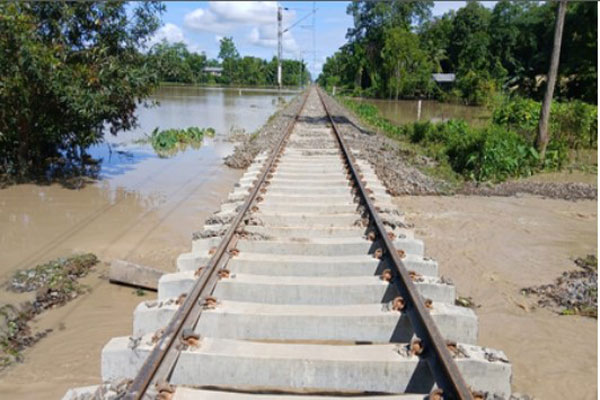
Tracks, embankments, bridges and other railway structures can suffer damage during prolonged spells of rain.
For Tripura, Mizoram and Manipur, repeated disruptions on the Lumding-Badarpur corridor can have a wider impact because of the route’s importance as a surface connection with the rest of India.
For now, railway authorities are continuing restoration work. But until the affected tracks are fully repaired and declared safe, normal rail connectivity to Tripura remains without a confirmed restoration date.
