

Improved irrigation, wider drinking water access, stronger women-led SHGs and expanding digital connectivity are reshaping rural development across Tripura, according to Chief Minister Manik Saha’s Independence Day address.
3 Key Takeaways:
- Irrigation facilities now cover 1.24 lakh hectares of cultivable land, while 6.49 lakh rural households have received drinking water connections.
- Nearly 4.96 lakh rural women have joined 55,693 self-help groups, supported by Rs 837 crore in community funds and Rs 2,400 crore in bank credit.
- Digital connectivity is expanding through 104 new mobile tower sites under the 4G Saturation Project.
Rural Development Gets a Multi-Sector Push
Agartala August 16: Rural development is emerging as a key focus of the state government’s development strategy in Tripura. The approach combines farm irrigation, drinking water, women’s livelihoods, agricultural credit and digital connectivity.
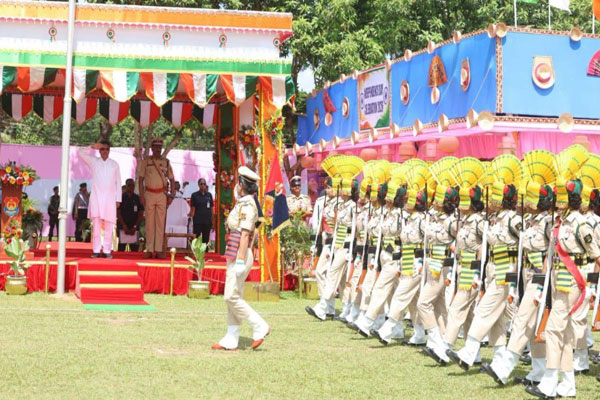
Chief Minister Manik Saha highlighted these initiatives during his Independence Day address on August 15. He said infrastructure and financial support are being expanded to improve economic opportunities in rural areas.
The government is also linking welfare programmes with livelihood generation. The objective is to strengthen household incomes while improving access to essential services.
Irrigation Network Expands Across Farmland
Agriculture remains central to the rural economy. Saha said irrigation facilities now cover 1.24 lakh hectares of cultivable land.
The state has around 2.55 lakh hectares of cultivable land. The current irrigation coverage therefore extends to almost half of the total cultivable area.
Greater access to irrigation can reduce dependence on rainfall. It can also support more reliable crop production and encourage farmers to cultivate multiple crops where local conditions permit.
The government has also promoted institutional credit for farmers. Around 56,600 farmers have received loans totalling Rs 438 crore through Kisan Credit Cards.
In addition, nearly 2.30 lakh farmers have received direct financial support under the PM-KISAN scheme.
More than 26,800 farmers have also adopted organic farming, according to the Chief Minister.
Drinking Water Reaches More Rural Households
Access to safe drinking water forms another major part of the rural infrastructure push.
Saha said drinking water facilities have reached 6.49 lakh rural households.
The expansion of household water access can reduce the burden of collecting water, particularly for women in rural communities. It can also improve basic living conditions and strengthen public health outcomes.
The focus on water infrastructure complements the expansion of irrigation facilities. Together, the two initiatives address both household needs and agricultural requirements.
Women-led SHGs Strengthen Rural Livelihoods
Women’s self-help groups have become another important pillar of the rural economy.
Saha said nearly 4.96 lakh rural women have been organised into 55,693 self-help groups under the Tripura Rural Livelihood Mission.
These groups have received Rs 837 crore in community funds. They have also secured Rs 2,400 crore in bank credit.
The scale of financing gives SHG members greater scope to undertake income-generating activities. Such activities can include small businesses, livestock-related work, food processing, handicrafts and other locally suitable enterprises.
The model also creates a pathway for women to access formal financial institutions and collective economic opportunities.
Digital Connectivity Reaches More Villages in Tripura
Rural development is increasingly linked to digital access. The government is therefore expanding mobile connectivity in underserved areas.
Saha said 104 new mobile tower sites have been commissioned under the 4G Saturation Project.
Improved connectivity can help rural residents access digital payments, online education, government services and financial platforms. It can also help small businesses communicate with customers and markets beyond their immediate areas.
The government has also provided financial assistance to 63,249 students for purchasing smartphones under the Chief Minister’s Yuva Yogayog Yojana.
This creates an additional link between digital infrastructure and access to education and public services.
Rural Development Linked to Economic Opportunities
The government’s rural development strategy extends beyond physical infrastructure. It combines agriculture, financial inclusion, women’s entrepreneurship and digital connectivity.
The expansion of irrigation can support farm productivity. Kisan Credit Cards can improve access to formal agricultural finance. SHGs can create new livelihood opportunities for rural women.
At the same time, wider mobile connectivity can connect villages with digital services and emerging markets.
The Chief Minister said the broader objective is to create economic opportunities for people while building a more inclusive and self-reliant state.
The initiatives highlighted in the Independence Day address indicate a development model that places rural households at the centre of infrastructure and livelihood programmes.
