

What began as a theft inside a resident doctors’ hostel has evolved into a wider governance reform at Agartala Government Medical College (AGMC) and Govind Ballabh Pant (GBP) Hospital. The hospital administration has initiated a comprehensive review of campus security, surveillance, patient services and accountability systems, signalling a shift from reactive policing to institutional reform at largest government healthcare facility in Tripura.
At a Glance
- Hostel theft prompts comprehensive governance reforms at GBP Hospital.
- Security review extends beyond crime prevention to institutional accountability.
- CCTV expansion, access control and better lighting form part of the reform plan.
- Hospital strengthens anti-corruption measures and patient grievance mechanisms.
- Authorities aim to build a safer and more accountable healthcare environment.
Agartala, August 05: Major institutional reforms are underway at Agartala Government Medical College (AGMC) and Govind Ballabh Pant (GBP) Hospital after a security breach exposed vulnerabilities within the state’s premier government healthcare institution. Rather than treating the incident as an isolated criminal act, the administration has chosen to use it as an opportunity to review the hospital’s overall security, governance and service delivery systems.
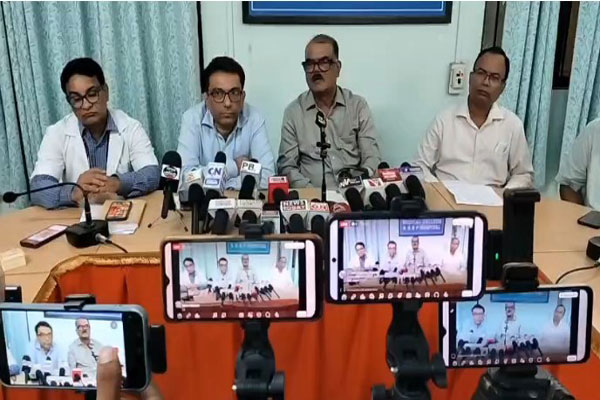
The reforms were announced during a press conference today, where AGMC Principal Prof. (Dr.) Tapan Majumdar and Medical Superintendent Dr. Bidhan Goswami outlined a roadmap that extends well beyond strengthening physical security. Their message was clear: improving hospital safety also requires better administration, greater accountability and stronger public trust.
A Single Incident Becomes a Catalyst for Reform
The review follows the July 30 incident in which an intruder allegedly entered the women’s resident doctors’ hostel through an open balcony, pushed a postgraduate resident doctor and fled with her mobile phone.
Hospital authorities acknowledged that the theft exposed gaps in surveillance and campus security. However, they also recognised deeper institutional challenges that demanded a broader response.
Instead of limiting action to the criminal investigation, the administration launched a campus-wide review covering infrastructure, security management, visitor movement and operational practices.
This marks a significant shift from responding to an incident towards addressing the systemic conditions that allowed it to occur.
Security Moves Beyond Guards and Gates
Officials identified multiple entry and exit points across the sprawling GBP Hospital campus as one of the biggest security concerns. Such unrestricted access, they said, makes monitoring difficult in one of the busiest public hospitals in Northeast India.
To address this, the administration plans to regulate unnecessary access points while strengthening physical barriers around vulnerable areas. Open sections of the women’s and interns’ hostels will be secured with iron grills, and fencing will be reinforced to reduce the risk of unauthorised entry.
The Public Works Department has also been entrusted with expanding CCTV coverage across the entire campus. Simultaneously, work is underway to improve lighting in poorly illuminated areas.
Together, these measures aim to create a security framework that relies on infrastructure as much as manpower.
Accountability Takes Centre Stage
The administration has also turned its attention to operational accountability.
Following the hostel incident, the private security agency received a show-cause notice after records indicated that scheduled night patrols had not been conducted as expected. Authorities have now instructed security personnel to maintain continuous patrols, including surveillance by plain-clothes staff during vulnerable hours.
Hospital officials stressed that accountability cannot stop with security personnel alone. Resident doctors have also been advised to avoid leaving access points open and to remain alert during off-duty hours.
The approach reflects a shared responsibility model, where institutional safety depends on both administrative systems and individual vigilance.
Governance Reform Extends to Patient Services
The review has also expanded into areas beyond campus security.
Responding to allegations circulating on social media regarding denial of treatment, the hospital has constituted an inquiry committee. The administration has assured that anyone found responsible for negligence will face disciplinary action.
Officials described this as part of a broader commitment to transparency and quality healthcare rather than a response to a single complaint.
Similarly, allegations that some employees sought money from patients prompted the administration to reiterate its zero-tolerance policy against corruption.
Medical Superintendent Dr. Bidhan Goswami clarified that all authorised payments at GBP Hospital are processed only through the central cash counter. No doctor, staff member or intermediary is permitted to collect money directly from patients or their families.
The hospital has already displayed public notices carrying complaint helpline numbers and plans to intensify awareness campaigns so that patients understand both their rights and the official payment process.
Balancing Openness with Security
Unlike many institutions, GBP Hospital functions as a major referral centre where thousands of patients, attendants and visitors enter the campus every day.
Hospital authorities acknowledged that such a public healthcare facility cannot function like a high-security complex. Screening every visitor is neither practical nor desirable in a busy emergency care environment.
Instead, the administration is adopting a risk-based approach. It combines improved surveillance, smarter deployment of security personnel, better infrastructure and greater public awareness without disrupting patient care.
Officials believe this balanced strategy will improve safety while preserving access to essential healthcare services.
Setting a New Direction for Institutional Governance
The developments at AGMC and GBP Hospital indicate that the administration is looking beyond immediate crisis management. The focus has shifted towards building stronger institutional systems that can prevent future incidents, improve service delivery and reinforce public confidence.
If implemented effectively, the reforms could become a model for security and governance improvements in other government hospitals across Tripura. More importantly, they underscore a broader lesson for public healthcare institutions: a single security breach can become the starting point for lasting administrative reform when it leads to meaningful institutional change rather than temporary corrective action.
