

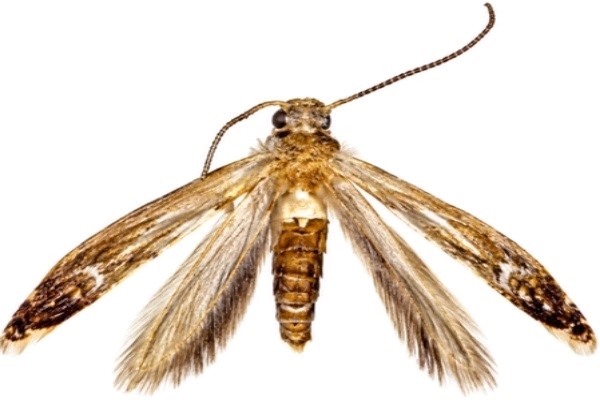
Researchers identified Glyphipterix brevimucronata near Mariani in Jorhat district after collecting a specimen in October 2025. The discovery, documented by an ICAR-IARI scientist and published in Zootaxa, adds a new species to India’s poorly studied sedge moth family.
At A Glance
-
Scientists have identified a new micro moth species, Glyphipterix brevimucronata, near Hollongapar Gibbon Sanctuary in Assam.
-
The 6.5 mm moth represents India’s first addition to the sedge moth family in almost 100 years.
-
The discovery highlights the unexplored insect diversity of Assam and the wider Northeast.
A newly identified micro moth measuring just 6.5 mm has placed Assam in the spotlight of scientific research.
The discovery near Hollongapar Gibbon Sanctuary in Jorhat district marks India’s first addition to the sedge moth family in almost a century.
Scientists have named the species Glyphipterix brevimucronata. Its identification highlights the unexplored insect diversity of Assam and the wider Northeast.
The discovery also points to the need for more extensive research into lesser-known insect groups.
New Micro Moth Identified Near Mariani
Kishore Chandra Sahoo, a scientist at the ICAR-Indian Agricultural Research Institute (IARI), Assam, described the newly identified species. Researchers found the moth near Mariani in Jorhat district.
Sahoo and Abhijith K.P. collected the holotype specimen on October 2, 2025. The scientific description of the species has appeared in the international journal Zootaxa.
The moth has brown forewings with a yellowish metallic sheen and distinctive white markings. Its scientific name combines two Latin words meaning “short” and “pointed”.
The name refers to a short, pointed structure in the insect’s reproductive anatomy. This distinctive anatomical feature helped researchers establish its scientific identity.
First Addition to India’s Sedge Moth Family in Nearly 100 Years
The discovery carries particular importance because researchers have conducted limited studies on India’s sedge moth diversity.
Scientifically classified under the family Glyphipterigidae, sedge moths comprise more than 530 described species worldwide. However, researchers have documented only 25 species in India.
The genus Glyphipterix has an especially limited history of documentation in the country. Except for one species, British entomologist Edward Meyrick described all Indian species belonging to this genus between 1907 and 1923.
The identification of Glyphipterix brevimucronata therefore marks a significant development after decades without a new addition to India’s sedge moth records.
The finding also highlights the gaps in scientific knowledge about the country’s insect population.
Himanta Biswa Sarma Welcomes Scientific Discovery
Assam Chief Minister Himanta Biswa Sarma welcomed the discovery through a social media post on Friday.
Calling it wonderful news for nature lovers, he said Assam’s natural environment continues to hold fascinating secrets waiting to be explored.
In his post on X, Sarma wrote, “Wonderful news for nature lovers! Assam is once again making headlines with the discovery of a new micro moth species near Hollongapar Gibbon Sanctuary. Named Glyphipterix brevimucronata, this discovery marks India’s first addition to the sedge moth family in nearly a century. Another reminder that Assam’s natural world still holds so many fascinating secrets waiting to be discovered.”
He also shared photographs of the newly identified insect.
Scientific Importance of Hollongapar Sanctuary
The discovery further strengthens the scientific significance of Hollongapar Gibbon Sanctuary.
Located in Jorhat district, the sanctuary covers just 20.98 square kilometres. It is the smallest wildlife sanctuary in Assam.
Hollongapar is best known as the habitat of the hoolock gibbon, India’s only ape species. The sanctuary also supports considerable diversity of butterflies and moths.
Scientists believe the latest finding reinforces the importance of systematic biodiversity surveys across the Northeast. Many small and lesser-known insect species in the region remain undocumented.
The discovery of Glyphipterix brevimucronata demonstrates how further scientific exploration could reveal more previously unknown species in the rich bio-diverse region. (Edited by Enewstime Desk)